Basic Food Storage For Prepping
When you start prepping, one of the first priorites is building up a food supply
We all have a certain amount of food stored in our cupboards in the kitchen. Some may have a larder that gives extra shelving and room for a lot more supplies to be stored, but how long would these food supplies last you in an emergency?
Now most of us have a fridge that's generally stocked up with enough provisions to get us by for a couple of days, maybe a week at a push.
Then there's the freezer. That's normally stocked up to some level. Traditionally there will be a few scraggy odds and ends tucked away at the back, but at least there's something there as a backup.
And, of course the good old neglected freezer.... That looks like a scene from Titanic with bits and pieces of food stuck to slabs of ice.

Is this like your freezer..!

Well folks, if that is genuinely all you have stocked up in your house, your in for a big shock when the SHTF.
I can say with pretty much 100% confidence that the vast majority of UK citizens have a painfully small amount of food stored in their homes for even the most basic emergency situation.
Also consider that the food you currently have may well have to feed you AND your family - that being the case, your stuffed...
The stash you currently have will diminish in record time and then what?
The smug answer is, "Well, I told you so".!
You should of been prepping and building a food store long ago. Basic food storage for prepping is not difficult, and it's also not too expensive if you do it bit by bit.
But for any prepper, food storage is definitely one of the very first priority requirements to add to your 'to do' list.
There is now a system of supplying the public with their supermarket food based on 3 days of food stocked.
Simply put, this means if the supply chain were to break (and there could be literally 100's of reasons for this to happen), but whatever stops even a small part of this 3 day restocking process, we would all see empty shelves in our supermarkets within days.
Maybe less if there's a massive disaster.
The good old British public would go bat shit crazy and buy anything and everything they could get their hands on probably within hours, let alone days.!!
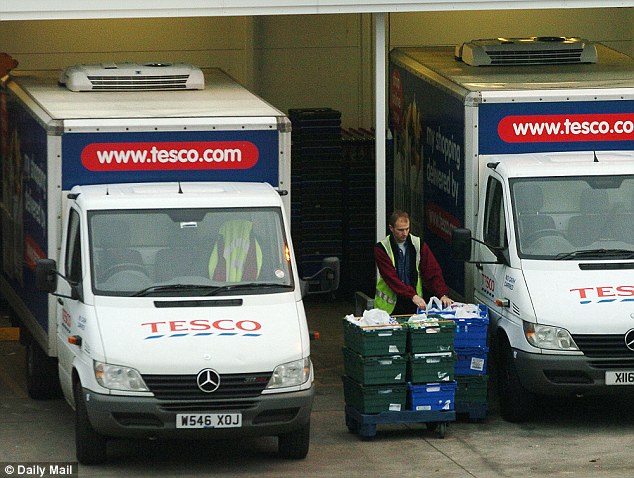
All supermarkets operate the 3 day restocking
So What You Waiting For.????
Do you really want to join all those those crazy people, running around like a headless chickens, fighting and trying to buy a can of beans.!
Of course you don't, so there's only one thing to do - start prepping and build up good supply of foods that will feed yourself and your family for months and possibly years.
It's not difficult. Providing you stick to a few simple rules you'll be fine. Here's the simple guidelines for food prepping:
- Packing and Storage are essential for long shelf life
- Always have a good supply of base level foods
- Keep good supplies of lifelong foods
- Flavourings are essential
- Ensure good food rotation and restocking records
- Always ensure you have more than on food cache

"Fast Tracking" your basic food storage for prepping
For anyone who want to build up a decent stash of long life foods there's one very simple and easy way to do so.
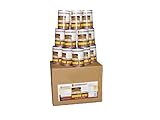
Namely, buy yourself some of the ready prepared, long shelf live and sealed emergency packs like the ones shown here >
This 'fast track' method can be a very good way to build your supplies quickly and safely. Although I would say there are cheaper methods as a typical 1 months supply like this one will cost you around £155.
Now that may sound expensive, but you have to consider there's enough food to keep you going for a month - in fact, having tested the Mountain House range, I would say you could make it last double that.
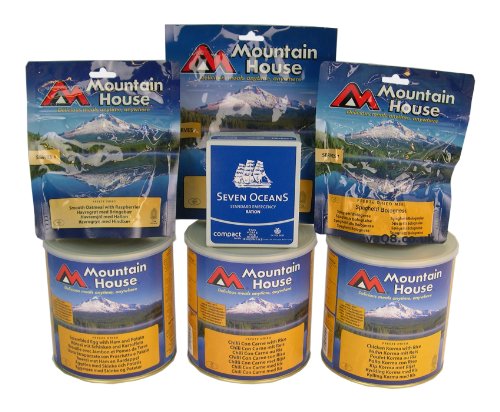
One of the biggest pluses is the fact that the product is given a minimum 25 year shelf life.!
Of course they offer a lot more than just a one month pack, with a 2 and 4 month pack available, I would also add that you would be looking to make these last a lot longer as well.
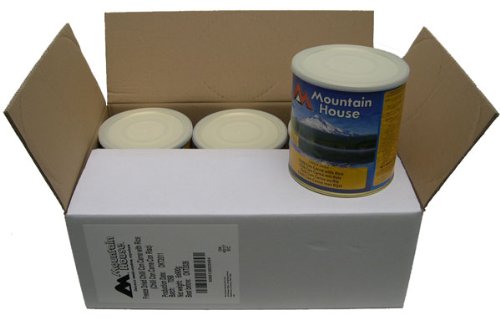
Two month supply costs around £250
Four month supply costs around £465
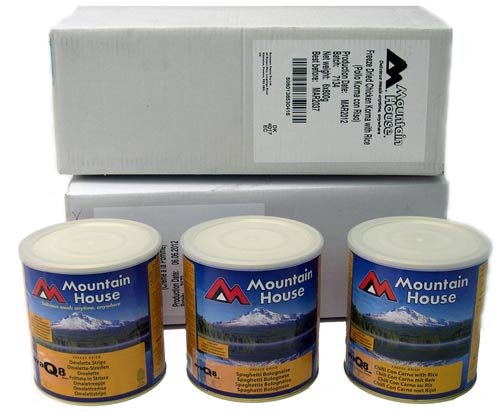
The Mountain House 'fast track' route is OK for some people and will definitely give you a boost in your survival food supplies.
It's well worth considering. Maybe even the odd box if you can afford it at the time.
But build your own "personalized" food stores as well.
 Steve Hart
 UK Prepper Guide
Certain foods cannot be ignored in your food supply store.
CLICK THE TABS TO SEE WHAT IS ESSENTIAL
- essential
FOODS - personal
FOODS - luxury
FOODS

Basic Food Storage for Prepping means you can still store all your treats

- Chocolate Chips
- Chocolate bars
- Nuts
- Raisins, Dried Apricots
- Poppy Seeds
- Cookies
- Granola Bars
There's an easy and simple way to give chocolate and other treats a good 2-3 years extended life, without loosing any taste or flavour.
This type of storage is easily achieved by using a vacuum sealer like the unit shown here >
These vacuum sealer are an excellent way to ensure you have a big supply of foods, but in a small compact size.

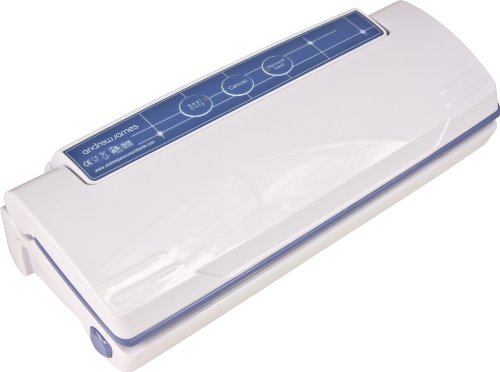
Vacuum sealing you food will add years to its life and is a really cost effective way to store your prepping supplies.
Your food storage methods are important
Storage is an essential part of keeping everything fresh and is as important as any of the methods you use to help preserve and increase the shelf live of you stores.
For the best results you must keep your supplies in a dry, cool and sun light free area - a cellar is the ideal place to do this.
However, most people do not have cellars these days, so you have to compromise.
Even in the smallest of homes you will find somewhere to store extra food - and remember, you don't have to put everything in one place.
In fact it's better to spread this around a bit throughout your house.
COOL , DRY & SUNLIGHT FREE
These are the three essentials for longer term storage - changes in any of these three can spoil you supplies and cause them to go rotten.
At the very least they will reduce their shelf life if exposed to these conditions for extended periods.
DATE ROTATION
Everything must be date marked. Cans and packets that have been bought will come with a use by date - but that date is always less than the actual length of time you can safely use the product.
It's simply a safety factor. I personally have tested out cans of beans that were twice the out of date mark and they tasted fine.
As a rule keep the longest date mark to the back of your stock and when a product at the front become within a year of its use by date, I simple use it.!
Then restock with new cans putting then at the back of the shelf.
This type of food store rotation is necessary for good control of you supplies.

A small cupboard can be ideal

A garage is another good choice

PACKAGING
When your storing products that are not in tins or wrapped only in paper (sugar bags for example). Extra precautions should be taken – put them in MYLAR BAGS WITH 300cc OXYGEN ABSORBERS this will help keep them dryer and moisture free.
Don't forget that any basic food storage for prepping includes removing all unnecessary packaging, especially cardboard.
There's certain little bugs that just love to infest and eat the glue and cardboard packaging.
Basic food Storage For Prepping
The Most Essential Foods To Store
Canned Liquid Food.
Don't overlook the high importance of canned foods with a high liquid content.
Some examples of good nutritious canned foods that are also high in liquid contents are:
- Soup - all types
- Pineapple juice - chunks of pineapple in a natural juice
- Vegetable juice
- Condensed milk, evaporated milk or coconut juice
- All types of vegetables in water or juice
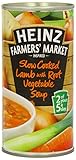
Canned soup is the ideal food for nutrition and liquid
- Buy storing canned foods with high liquid content you will also eliminate the need to add any of your precious water supply to the pot when cooking.
Dehydrated & Powdered Foods.
By storing dehydrated foods you will save on storage space and also money if you dehydrate your own foods.
Remember that milk is also a form of dehydrated food and is one of the best high nutrient foods for our body.
Powdered milk has many cooking uses and is a flavour enhancer to many other drinks.
Canned and dehydrated milk is very cheap and easy to store, and will last a good couple of years and more.
- Powdered milk can be added to many other foods to make good, nutritious meals and desserts like rice pudding.
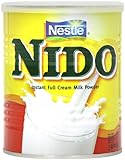
Six, 400 gram tubs for £22 - these will last a very long time.
Rice
Buy rice in bulk - you will save a ton of money and it just makes sense.
It's so easy to store and will stay fresh for years, especially if you keep it nice and cool and in a dry place.
There's hundreds of rice recipes and it can be added to just about anything to give bulk.
Being a carbohydrate, there's the added energy stores it will give you as well.
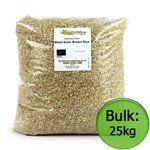
A 25kg bulk bag of rice will give you over 500 servings.!
Beans - chickpeas, lentils, garbanzo
The same principle applies to beans as it does rice - buy beans in bulk - again, you will save a ton of money and it just makes sense.
Beans will store and will stay fresh for years and can be an added source of extra vitamins and minerals needed to bulk up any meal.
There's hundreds of rice recipes and it can be added to just about anything to give bulk.
Being a carbohydrate, there's the added energy stores it will give you as well.
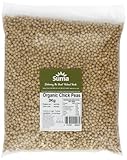
Oatmeal
A traditional main stay food - oatmeal is very easy to store and requires no more attention than rice and beans.
A few of these in your store and your breakfast is guaranteed.
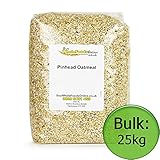
You should easily get at least 100 breakfasts from a 25kg bulk bag which represents great value for money.
Canned & Dehydrated Meat
Of all the basic food storage for prepping, storing meat is possibly the number one food to add to your supply.
You have to consider that meat will provide you with around 90% sustenance needed for you to survive.
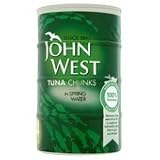
I would also include tinned tuna in this canned meat section as being a number one food to store.
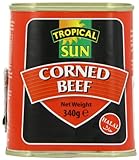
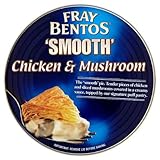
The mainstay of canned meats are Beef, Chicken, Tuna and then Ham or Spam.
Dehydrated meats
Don't forget, just about all meat can be dehydrated, in effect leaving you with delicious meat jerky.
By using various methods to remove the moisture your are left with a highly nutritious food that will keep for many months.
The principle behind jerky is to remove the water and moisture in the meat, thus rendering it uninhabitable for bacteria - germs cannot grow without moisture.
Smoking will add flavours to you meat, as well as marinating in various recipes.
But, in all honesty, I have found the easiest and simplest way to make my own meat jerky is using a simple dehydrator.
Obviously you can also use your dehydrator for many other foods and it works very well.
For jerky I have used cooked meat and cut into very thin slices before laying out to dehydrate.
I have also use a beef mix with my own 'secret' recipe and put it into a piping bag and spread it out along the trays.
Either way the results were good.
I always vacuum seal and date the jerky before adding to my store.
Canned Vegetables & Canned Fruit
When it comes to vegetables then think about canned root vegetables, like sweet potatoes or yams.
Canned sauerkraut, cabbage, carrots, peas, mushrooms or even beets.
These will all add substance and nutrition to your survival meals.
Canned goods have a very good shelf life, 2 years plus and are very easy to store. Probably the biggest advantage to stocking canned veggies and fruit is their low price.
It's easy to build up good store of varied foods for very little money.
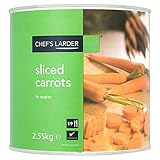
- Remember this, before stocking up your canned veggies - canned fruits contain almost double the the calories per pound as veggies.
Canned Fruits will also give you more liquid content and the citrus fruits add higher amount of vitamin C as well.
Essential for your survival meals.
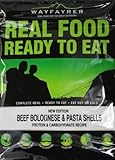
Packet meals
Ready to eat packet meals offer you ready made food as and when you want it.
No messy about preparing meals - just add water. These are worth thinking about although they are a bit expensive compared to doing it yourself.
I would also definitely add packets some dried potatoes.
Mr Mash or Smash are my favourite. Again they are long shelf life being dried foods and will add bulk and calories to your meals.
Don't Forget The Small Stuff
- Protein Bars & Protein Drinks
- Coffee, Tea, Hot Chocolate
- Olive Oils
- Raisins & Dried Fruits
- Salt
- Jams & Jellies
- Nuts & Seeds
- Sugar
- Spices & Herbs
- Honey
And finally - get familiar with you food...
Don't just buy and forget. Get used to the foods you have stored. Get use to cooking with them and making up meals from specific items in your store.
You can almost think of you prepping store as one big larder that you use alongside your main kitchen cupboards.
Experiment and test out the best ways to prepare meals using only stored foods. If you can do this, then your well on your way to being fully prepared.
There are many ways to preserve and build up a food store.
Don't get caught out - get prepared first by using the methods I've shown you above, you'll soon have the peace of mind us prepper have.
Happy Prepping Folks.
Steve
Keep updated with all the latest prepping news and information
* Enter your name & a valid Email address
* You will receive an Email titled 'Preppers Newsletter Subscription'.
* Simply confirm to have access to our regular newsletter and also get your free PDF copy of: 'Beginning Prepping'


 ]]>
]]>
Can you really eat insects and bugs?
Yes, of course you can, alive or dead, but there’s always that risk of getting something quite nasty as a result.
In this review I want to show you a way you can try a whole selection of insects and bugs that you wouldn’t normally think of eating.
Kindly donated by BugGrub, I shall go through a good selection from simple worms to some nice juicy scorpions.!
These are my samples for this review: 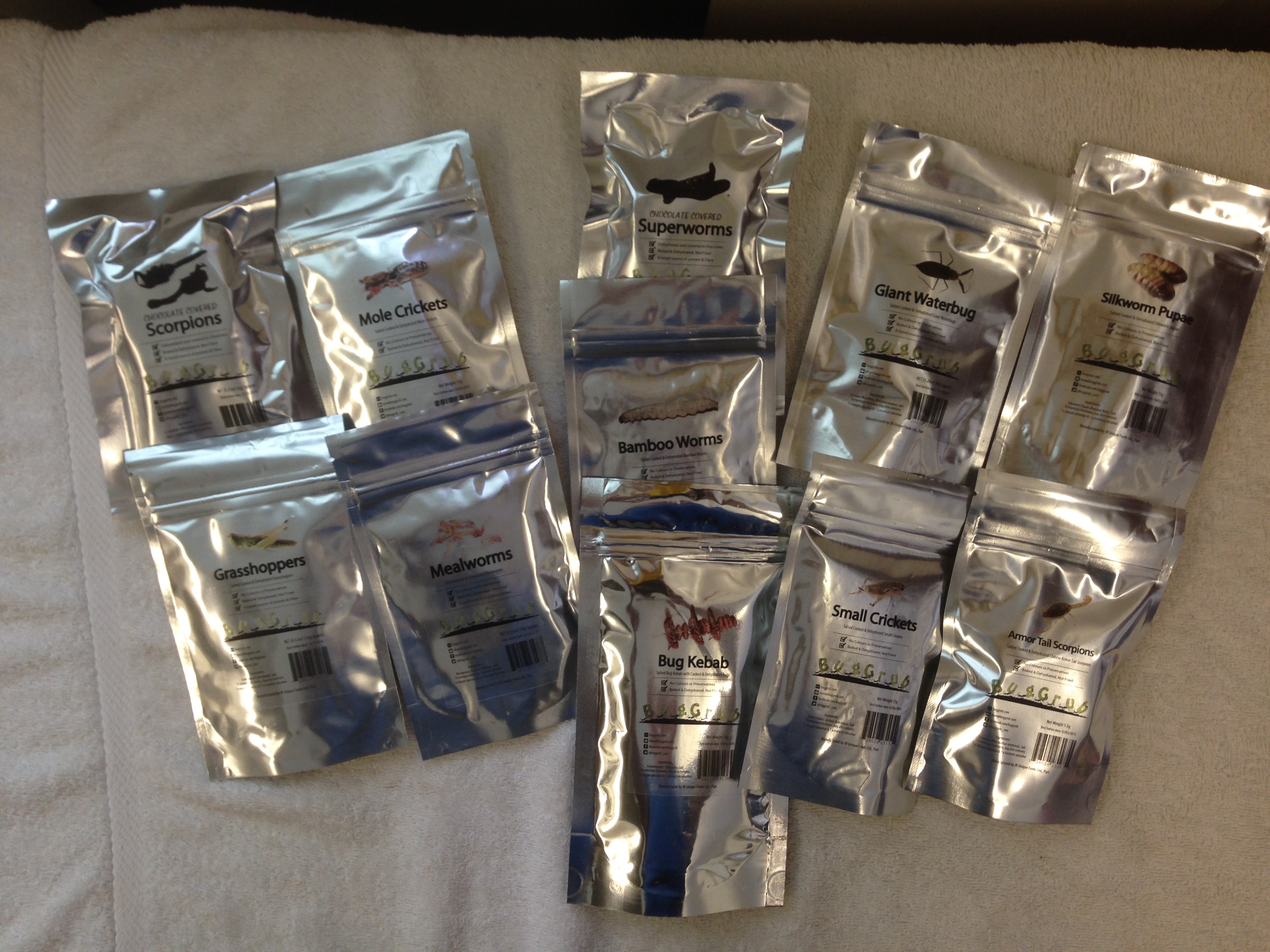
- Bamboo Worms
- Grasshoppers
- Giant Waterbug
- Superworms
- Armour Tail Scorpions
- Mealworms
- Mole Crickets
- Small Crickets
- Scorpions
- Silkworm Pupae
- Bug Kebab
click image to enlarge
When we think of insects and bugs as food, we normally think of someone like Bear Grylls, chomping away on a big fat maggot or some other crunchy critter and think “I’d like to try that”….
As well as insects being possible life savers in a survival situation, they are also surprisingly nutritious, with a simple grasshopper having some 30g protein per 100grams.
Edible insects in the UK are quite rare and finding a good selection of safe edible insects and bug food, even rarer.
So I have jumped at this opportunity to test out and review this great selection and this is my review video:
Edible insects Uk – test & review
So, as you can see, a great selection of bugs and insects, perfectly prepared and packaged, making a great high protein snack at any time.
They look good and really do taste good – especially the chocolate covered scorpion.!
My final verdict – get yourself over to BugGrub and order some, their grrrrrreat…  Don’t forget to enter my FREE PRIZE DRAW for a Bushtucker Bug Fest Banquet
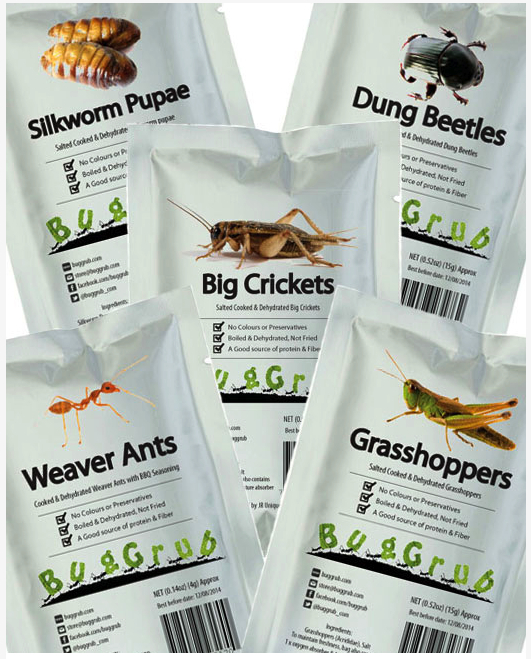
1st prize – win a 7 piece bug banquet
2nd prize – win a 5 piece bug banquet
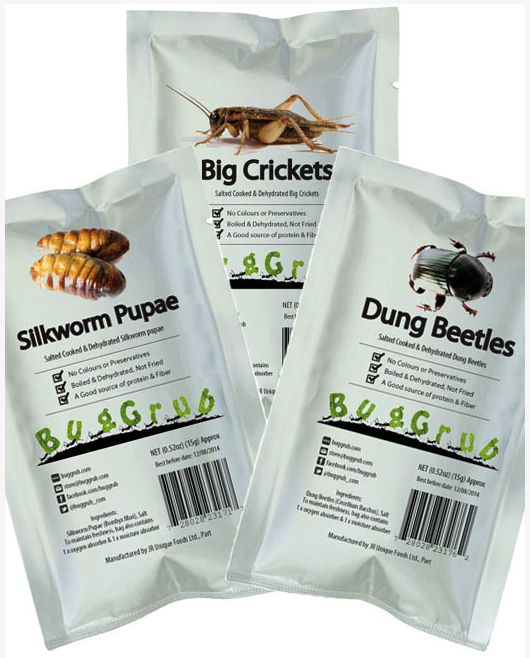
3rd prize – win a 3 piece bug banquet
find out more here – Bug Fest Competition
If you liked this article - Please Share It
 ]]>
]]>Welcome to our FREE PRIZE DRAW for May – NOW ENDED
enter for a chance to win one of three top prizes of Bush Tucker Bug Banquets.
Kindly donated by our friends over at BugGrub.com
to see the all the bugs on offer – see my full edible bug review
The Bug Grub Contest has now finished – congratulations to prize draw winners:
- 1st prize: 7 piece Bush Tucker Banquet – Dave Howells
- 2nd prize: 5 piece Bush Tucker Banquet – Kev Bowser
- 3rd prize: 3 piece Bush Tucker Banquet – Carla Knight
A big thank you to all those who entered and watch out for our next free draw contest.
*Prizewinners will be notified by Email on 2nd June 2014 and receive their prize completely free of any charges.
Prizes: 1st place – 7 Piece Bush Tucker Banquet
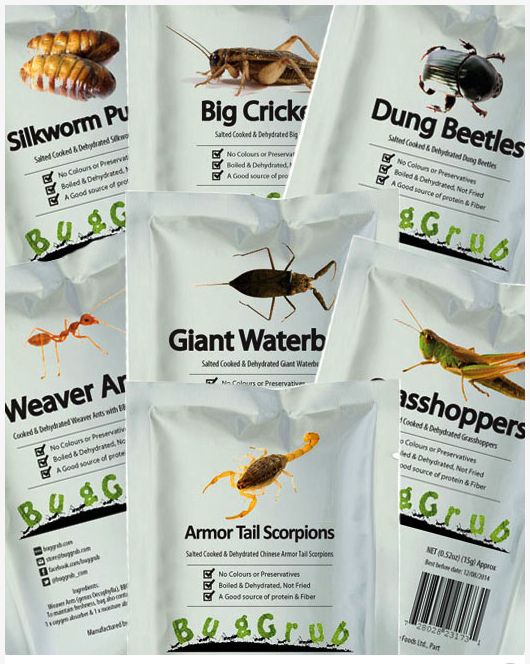
Prizes: 2nd place – 5 Piece Bush Tucker Banquet |
|||
 |
|||
Prizes: 3rd place – 3 Piece Bush Tucker Banquet |
|||
 |
|||
If you liked this article - Please Share It
 ]]>
]]>MRE Meals Ready to Eat 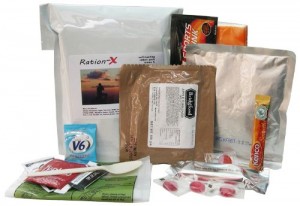
An MRE is simply a Meal Ready to Eat and when most people think of one they usually think military meals, but there are any numbers of civilian versions on the market that are available virtually anywhere in the world that are comparable.
MRE’s the Good the Bad and Are There Alternatives
There is a distinct difference however, between the so-called Mil-Spec meals versus meals that are actually issued by the military. The meals are ideal for home emergency kits and survival packs and they are a favourite of many Preppers.  The typical meal contains roughly 1,200 calories and it is recommended that each adult consume two daily to maintain adequate caloric intake. Remember that during a crisis situation or a survival scenario, your activity level will increase and thus you will need more calories. The shelf life of an average MRE is from five to seven years – these are under normal conditions. The shelf can be extended if kept cool and it is recommended you store them at 15ᵒC (60ᵒF) or below if you want to extend the shelf life. According to the U.S. Army’s Natick Research Laboratories, a meal stored at 15ᵒC (60ᵒF) can have a shelf life of up to 130 months (10.8 years).
  However, they can be stored at virtually any temperature but keep in mind the shelf life will be reduced if stored at higher than normal temperatures. For example a Meal Ready to Eat that is designed using the standard protocol and stored at 32ᵒC (90ᵒF) you can expect a shelf life of 55 months, and a shelf life of 22 months when stored at 37ᵒC (100ᵒF).
Acceptable Design Standards for an MRE Package
- The outer layer is polyester
- Next layer is nylon for durability, which helps prevents damage when dropped or bumped around in your pack
- Middle layer should be aluminium foil, which acts as a moisture barrier, and prevents damage to the product from light and oxygen
- The inner layer next to the food is usually polypropylene which is food grade safe material that is compatible with all types of foods and prevents any unwanted tastes transferring to the food such as what you get with canned foods or foods packaged in certain plastics, and it also allows the foods to be heated without bursting the package
Non Military MRE packs
 The typical civilian meal will include an entrée, dessert and sundry pack along with eating utensils and a heat pack in some cases. The pack shown here is Self Heating Field Ration Pack Ready To Eat Meal and comprises of the following:
- Complete self-heating ready-to-eat ration meal
- Contains a main meal with dessert, snacks, and accessory kit
- more than 1200 kcal of energy per pack
- light-weight waterproof re-sealable packaging
- weighs less than 750 grams
- more information, reviews and prices on self heating field ration packs – click here
Single portion MRE packs
Expect to pay, on average around £5 per meal for the single portion packs. That’s a breakfast, dinner or dessert pack. However, a typical case will contain 6 or 12 meals in single packages and give a full days rations [breakfast, lunch and tea] and will give you plenty of calories for physical work. This works out very good value coming in around £12 – £15 per day per person and contains all the food essentials for survival when it’s not possible to hunt or fish or you have to keep moving and do not have time to set up a camp, hunt and build fires.


Typical day pack will contain:
- Six complete day ration packs menus 1 through 6
- 3000 Calories per ration pack – 18,000 calories in total
- All the meals are fully cooked and ready to eat
- Can be eaten hot or cold
Pros and Cons
An MRE is not a diet meal.
 The meals are ideal for emergencies where preparing a regular meal is either impossible or impractical.
Bear in mind that military personnel are, for the most part, extremely very active so the calories contained in the meal packs do not create a dietary dilemma, but if you are someone who leads a sedentary lifestyle, you may well find the high calories, fat and carbohydrates a problem to digest properly – eaten regularly, without expending those extra calories WILL increase your body weight – these are survival foods designed to keep you very active and give you energy to do all the work expected in a survival situation.

There are a variety from which to choose from – normally labelled, menu A,B,C etc – and most people would be able to find their ideal meal.The meals are self- contained full meals and as stated earlier they can be stored and carried under any conditions.
There is no need to carry any condiments, utensils or desserts because each package has all that is needed for each meal. The packaging in a survival situation can be used to store or carry water and military issued meals will have matches and/or heat tabs for fire starting along with water purification tablets in some cases.
 The Ration-X field ration [ shown here ] is a complete and ready-to-eat, self-contained meal which comes in a light, water-proof sealed pack.
This pack has a main meal with a dessert, various snacks, some powdered drink and an accessory kit. There’s a neat little flameless heater that’s included which means you can heat the main meal and don’t need a fire or stove.
Everything comes pre-cooked and is complete, ready to eat and can be eaten hot or, if you prefer, cold.
These survival MRE packs will give you over 1200 kcal per. This is in line with standard military requirements for highly active soldiers.
Typical Contents: Menu A: Ready to eat main meal -
All Day Breakfast Dessert – Apple Turnover Snack Bar Boiled sweets Drink – powdered electrolyte Flameless Ration Heater – single use Accessory Kit: instant coffee, tea bag, 2 x sugar, 2 x whitener, 10 x tissues, chewing gum, bio-degradable spoon, wet wipe Menu B: Ready to eat main meal – Chicken Curry (Massaman Potato) Golden Oatie Biscuits Dessert – Cherry pie Snack – Tooti Frutti Drink – powdered electrolyte Flameless Ration Heater – single use Accessory kit: instant coffee, tea bag, 2 x sugar, 2 x whitener, 10 x tissues, chewing gum, bio-degradable spoon, wet wipe. Menu C: Ready to eat main meal – Vegetarian Thai Green Curry Snack – Whole-wheat Bread (long-life) Snack – Peanut Butter Squeeze tube Dessert – Dried Fruit & Nut mix Drink – powdered electrolyte Flameless Ration Heater – single use Accessory Kit: instant coffee powder, tea bag, 2 x sugar, 2 x whitener, 10 x tissues, chewing gum, bio-degradable spoon, wet wipe Long life – Guaranteed at least 12 months shelf-life on all components from the date of sale.
Click here for more information, reviews and prices – pack of Three Self Heating Field Ration Packs – Ready To Eat Meals Menu A, B & C
Remember, heating these meals is not required. If you prefer, you can also eat them cold.
The packaging is lightweight and it would be quite easy to carry a week’s worth of meals in any survival pack or bug out bag – Some people carry their emergency Meals Ready to Eat in their vehicles for emergencies and some even have one or two in their everyday carry kits.
Can You Make Your Own
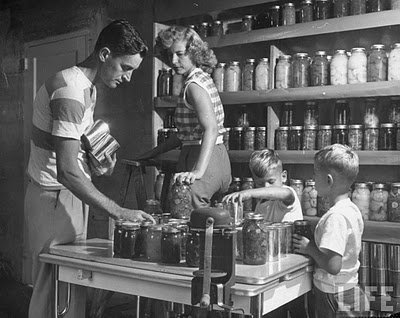 Canning – like they used to do in the old day.! – is the most logical choice for making otherwise perishable foods shelf stable, in other words, will not require refrigeration after processing.
Canning is common for those that have gardens and want to preserve their surplus produce, and often time’s people will buy large volumes of produce at the market to “put up” for the cold winter months.
Which makes it a very cheap especially if you grow your own or get your supplies when they are at their lowest price, or better still, free.
Meat and fruits can also be canned but meat processed for shelf stability will require a pressure canner that is capable of increasing the water temperature beyond that of the typical boiling point of 100ᵒC (212ᵒF). You usually have to increase the temperature of the water for meat processing to 115ᵒC (240ᵒF). This is to ensure all microorganisms in the meat are destroyed.
The food would typically be canned in glass jars, which can create a problem if you have to pack them in a survival kit or transport by vehicle. Then there is the variety, you typically cannot mix products in the jar so one jar would be meats, one vegetables and one of fruit. The recommended daily diet for an adult is one tin or jar of protein (meat), vegetable and one of fruit daily.
An MRE is not difficult to make but you would have to buy the product unless you can raise it, and then have the equipment to can it or otherwise preserve it. Meats, fruits and vegetables can be dehydrated, but if done at home you can expect a shelf life of six months and it will take large volumes of product to ensure you had enough variety to sustain you and your family for any extended period. Freeze drying foods would be difficult at home.
Bought in survival packs are the best choice
All in all, the equipment required to give a good quality emergency food pack with the calories required for a survival scenario is best left upto the big boys! You simple cannot produce a cost effective survival meal at home unless very dedicated.
The MRE survival food pack offers preppers exactly what we want for many reasons and including then in you bug out equipment and prepping plans is essential AND they even taste nice..!!!
If you liked this article - Please Share It
 ]]>
]]>Prepping Supplies

As human beings we are both lazy and not lazy, willing or not willing and when it comes to survival of the end of the world, we are either prepared or not prepared. Simple as that really.
But for those who want to give themselves at least half a cchanceof survival it’s essential to stockpile your prepping supplies and keep adding to them whenever possible.
It is a known fact that if you can survive the first 72hrs of any disaster situation your overall chances of surviving are very dramatically increased.
With the 72 hrs rule in mind, always begin your prepping with the essential survival items for your situation, then expand your  prepping supplies from there on -
When deciding on your prepping supplies it is essential to consider your own particular situation and location and, of course, your budget.
If you decide to live in the tornado capital of the world then that’s your choice, you prepare accordingly. The same applies if you live below the floodplain and in an earthquake zone.
Your choice of prepping supplies will be dictated by your location and what you perceive the highest danger is to you and your family.
As a UK Prepper we get precious few earthquakes, totornadoesr hurricanes to really worry us – at the moment…. But we can be quite susceptible to flooding and snow in some areas.
But prepping and accumulating your pepping supplies will still follow a very general rule of thumb for most people regardless of where, in the world, you live.
Prepping Supplies Main Guidelines
- Water – begin your prepping with a minimum of 3 days supply of drinking water and build from there, increase to larger amount of water storage as you increase your other prepping supplies.
- Water purification – have alternative methods of obtaining purified drinking water from ponds, rivers etc in the event of a SHTF situation..
- Emergency drinking water – if you have to bug out or are caught in a disaster situation you must ensure you have a means to obtain emergency drinking water and carry this with you in your bug out bag.
- Food – shelf live is one of the most important factors when stocking up on food prepping supplies. There are ways to extend the shelf life of most foods, including fresh foods, a dehydrator will give you loads and you can choose when you purchase your supplies at their cheapest, or sometimes for free.. Most canned foods have a very good shelf life – normally at least two years – but stored correctly this can be increased substantially. Freeze dried foods from the specialist food suppliers are gaining popularity with preppers and these can offer you a shelf live of over 20 years! – The downside is they work out quite expensive – but if purchased wisely, they make very high quality preppers supplies.
- Emergency survival food – this is the first thing to start with as you plan your prepping supplies. Emergency survival food for the first 72hrs and survival food for your bug out bag if you need to ‘get out of dodge’ quick will ensure you have the essentials for getting through a disaster situation.
- Medical - if SHTF you will not be able to get your normal medical supplies – if you have prescribed medication that you need to take regularly this is going to be a big problem.! Therefore it is especially important to ensure your prepping supplies include your prescribed medication for a prolonged period of time – in fact as much as possible really. Also include them in your bug out bag, enough for 7 days supply. A general emergency medication supply and first aid kit must be assembled to take care of immediate medical situations that may occur.
- Shelter - Your home should be enough protection against the elements under normal circumstances but if the power is out, you have no lighting, no heating, no fridge, no cooking – even your gas and water supply would soon stop if the pumping stations had no power too. Imagine if this had happened this winter – a winter that seemed to last for ever… You must consider clothing and keeping warm, lighting and methods of storing food as well as how you are going to cook and wash as an essential part of your prepping supplies.
- Cooking - you may have a good storage of foods but most will be canned or dried and need to be reheated and cooked – cooking over an open fire is not as easy as it looks – so a good method of cooking your stored food needs to available, and not only available you must be able to use it proficiently.
- Sanitation - without doubt one of the biggest killers after any disaster situation. Prepping supplies must include methods for personal hygiene and sanitation – Imagine if you could not flush the loo for a day… then two days and three and so on – This isn’t the sexy, ‘wow, look at my bug out bag and all the goodies I’ve got’ – No, its real life. Forget all this making fire by rubbing two boy scouts together malarkey, buy a lighter – But far more importantly -sort your poo out folks – this will kill you even if the neighbors don’t…
- Defence - now you have amassed a good stock of prepping supplies and are nicely prepared feeling confident you can last the initial 72 hrs and beyond, are you going to just let any Joe Soap just wander in and take them – ‘good grief, no, over my dead body’ I hear you say… – so a means to defend you ‘stash’ and your family becomes even more important now. In the UK we have ultra strict laws on owning weapons for defence. However, there are weapons, very effective weapons us Brits can purchase and use to defend ourselves if ever there were to be a situation of WROL
This, of course, is not the definitive survival prepping supplies list. Everyone has their own essential items and methods of dealing with prepping for survival of a future unknown event.
But it’s a good place to start..!
If you liked this article - Please Share It
 ]]>
]]>Prepping Equipment
food dehydrator – bottling and vacuum sealer
Below is information for essential prepping equipment that is  readily available to preppers in the UK. This list could be adapted to suit your own survival needs and situation.
Some items of survival equipment may not be high up in your survival kit list, but there are many essential items that must be obtained first
This prepping equipment is a very good addition to making your prepping a lot easier.
The cost of your food is not going down
You weekly or monthly food bill will, no doubt, take up a large part of your income and it’s hard enough to make ends meet sometimes. So the thought of building up a stock pile of additional food and supplies can be a daunting and somewhat overwhelming task for any new UK Prepper.
But you have to start somewhere, a little at a time and your stocks will soon grow from extra daily supplies, to weekly and then on to having survival supplies for months. By adapting a preppers state of mind you can even save money on your shopping bills.!

The two best money saving tips for prepping equipment that will make your live substantially easier and far more efficient as you build up your survival supplies.
These items are well worth the initial cost and will enable you to have a larger store of survival foods that cost you a fraction of the original shop bought items.
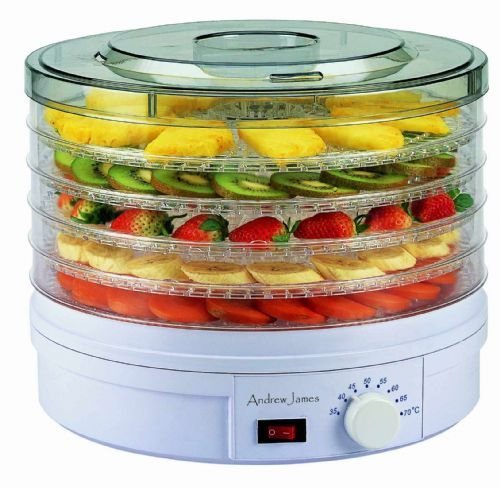
FOOD DEHYDRATOR:
This will save a lot of money in the future and is an excellent source of good quality foods that are high in nutrients.
The advantage here is to buy your fruits and vegetable when there are in season and at their cheapest – even cheaper £00:00, is to go out and pick your own.
You will very soon have a survival storage of snacks and good quality foods that just require a little re-hydration to bring them back to being as near perfect as when you picked them.
As a general rule, dehydrated food will last 6 months to 1 year if stored properly based on ‘room temperature’, or 70 degrees F (21 C). *for every 10 deg cooler you can extend the life from 1 year to 2 years.
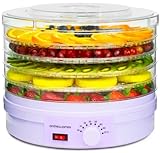
Most food dehydrators are very reasonably priced, with the one shown here costing under £50 all in – this should easily be recouped on your first batch of dehydrated foods.
The Dehydrator shown is: Andrew James Food Dehydrator With Adjustable Temperature Control – 5 Levels – View Here

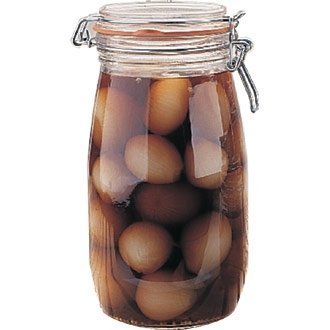
BOTTLING or CANNING EQUIPMENT:
Learn the art [very easy] of Bottling or Canning your food. Almost anything can be preserved by using the bottling method.
An enormous amount of preppers use this way to stock up their survival supplies.
Again, the secret to making this a very cost effective means of large survival storage is to buy or pick the foods when they are in season and at their very cheapest.
You will get, at the very least, a 5 year shelf life if bottled and stored correctly – the weakest point is the bottle lid seal, that can dry and perish slightly – always check the bottles and rotate your stock.
The jar shown is: Glass Preserve Food Storage Kilner Jar – with Clip – Size – 2.0Ltr - View Here

ADDITIONAL EQUIPMENT
Food Saver Vacuum Sealer:
This is worth considering as it’s a very good space saving method to store most foods.
The additional shelf life gained from simply removing the oxygen from the jar can be quite substantial – years in fact, with certain foods.
Vacuum sealing grains and rice will help stop the foods sticking together and give you a much more extended shelf life – in fact, if the packs are stored correctly – in a cool, dark cellar for example, the shelf life can be anything up to 10 years plus.

The vacuum sealer shown here is the Food Saver Vacuum Sealer
These food sealers are not cheap – with most good quality units costing over £100 – but they will, without doubt, save you a lot more money in the long run.
But their main objective is making your prepping life easier. Using a vacuum sealer will enable you to build up a good supply of dehydrated foods that are compact and long lasting, and for us preppers, thats a must.
You are going to need to purchase the proper sealing bags – any old bag will not really do. As you need the sealing bag to be a good quality and size suitable for the vacuum sealer and also to be strong enough for long term storage.
Generally I would purchase the sealing bags from the same manufacturer as the main unit – 

heres the link for the bags: Vacuum Food Sealer Bags – 50 Bags Included – 22 cm X 30 cm
Without a doubt these methods WILL YOU SAVE MONEY and also enable you to still have a supply of all the foods and snack you like.
They are all great bits of prepping equipment that will make your life so much easier in the long run and are definitely worth adding to your preppers cupboard – even if you only use then once a year they will pay for themselves in a very short time.
Happy prepping folks….
.
If you liked this article - Please Share It ]]>
]]>