Fish Antibiotics For Humans

In the UK, antibiotics are a prescribed medicine, meaning you they can only be obtained once you have seen your doctor and have been given a prescription to buy at the pharmacist.
Now that's all well and good at the moment, when things are fine, and people are just busily struggling along day to day, getting on with things. But how well prepared are you if things go bad, and the doctors aren't there to prescribe, or the chemist has been ransacked, and all you have is empty shelves..?
An Infected Cut Or Chesty Cough
Now Has The Potential To Kill You
In a disaster or bug out situation where the normal medical facilities such as doctors, pharmacies, and hospitals are not able to function, essential supplies of basic medicines will simply not be available.
As well as that, your pharmacist will not hand out anti-biotics without you first visiting your doctor for a prescription. Do you know why? To ensure your illness is in fact a bacterial infection, as viruses do not respond to antibiotics.

For example Influenza is a virus infection – this is why your doctor will never prescribe you antibiotics for this.
In this article, I will take a look at the options available. Their safety and feasibility of this option for us preppers, as well as considering other important survival and safety factors.
As preppers we know that an awful lot of things taken for granted now, will become very scarce and hard to get hold of.

In times of hardship and when you’re in a pinch, many everyday items can be replaced by alternatives:
The same applies to many traditional medical supplies:
Honey makes excellent cough syrup, spirits like vodka can be substituted for rubbing alcohol, even your T-shirt and a safety pin for a sling.
But there are a few, essential, must-have, lifesaving items that nothing can replace. One such items is: oral antibiotics.
Are Fish Antibiotics
Safe For Human Consumption?
Before going any further in this article, deciding to take a drug that is technically not for human consumption, requires a degree of research.
That's where you come in: Do Not Take My Word For It. Do you own, in depth research first. There's a lot of information on the internet, giving fish antibiotics both a good and bad name.
I'm not a doctor, chemist, or any other medical boffin. So to some degree, my opinion is useless! But I have looked at as much information as I can to make a calculated decision and here are my conclusions:
There are three main questions to the safety of fish antibiotics for humans:
- What are the specific ingredients comparing Fish Antibiotics vs Human Antibiotics?
- Do dosages differ? If so, what is offered?
- Are there any side effects?
The list below gives the fish antibiotic name, active ingredients, dosage and what symptoms they cure.
Fish Antibiotic
Fin Mox Forte
Active Ingredient
Amoxicillin
Dosage
500mg
Amoxicillin is a penicillin antibiotic that fights bacteria. Amoxicillin is used to treat many different types of infection caused by bacteria, such as tonsillitis, bronchitis, pneumonia, gonorrhoea, and infections of the ear, nose, throat, skin, or urinary tract.
Cephalexin is a cephalosporin (SEF a low spor in) antibiotic. It works by fighting bacteria in your body. Cephalexin is used to treat infections caused by bacteria, including upper respiratory infections, ear infections, skin infections, and urinary tract infections.
Ciprofloxacin is an antibiotic used to treat a number of bacterial infections.[2]This includes bone and joint infections, intra abdominal infections, certain type of infectious diarrhea, respiratory tract infections, skin infections, typhoid fever, and urinary tract infections, among others
Penicillin (PCN or pen) is a group of antibiotics which include penicillin G(intravenous use), penicillin V (use by mouth), procaine penicillin, and benzathine penicillin (intramuscular use). Penicillin antibiotics were among the first medications to be effective against many bacterial infections caused by staphylococci and streptococci.
*side note:
Penicillin was among the first natural oral antibiotic that could be used for medicinal
purposes, and discovered in the 1950s.
However, two other drugs, Ampicillin and Amoxicillin are within the Penicillin family, so if you are allergic to either of those medicines, you will also be allergic to Penicillin.
As preppers having these other sources of antibiotics could make things a little easier should the SHTF. The fish antibiotics appear to have the same ingredient, and in many cases, also have the same dosage as those drugs offered to us from the doctors/pharmacies.
That being said, side effects, if any, are the same as for human antibiotics.
General Safety Factors To Consider
When choosing
Fish Antibiotics For For Humans
Dosage Of Fish Antibiotics For Humans
Contents Of Fish Antibiotics For Humans
Storage Of Fish Antibiotics For Humans
Will Fish Antibiotics
Work The Same As Human Antibiotics?
From my research, and also from hours of trolling forums looking at individual cases, it would seem that fish antibiotics are ok for human use.
There are a huge amount of people already taking them, especially in countries where the cost is exorbitant. From what I have found, side effects are pretty much zero, yet results on par with human antibiotics.
But again, I reiterate, do your own research and form your own opinion. Do not take my word for it.
Who Sells Fish Antibiotics?
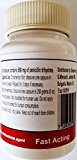
Obviously a fish pet shop should would sell these, along with other animal medicines.
But there are plenty of other places to look online.
The key thing to remember is the type of antibiotic, the dosage and, most importantly, ensure it only contains the prescribed drug. i.e: Penicillin only, like the one shown here, and does not have any other fillers or ingredients added.

CONCLUSION:
Are Fish Antibiotics Safe For Humans?
I would say, based on the evidence I have researched and found, that fish antibiotics for humans are a very low risk, and definitely have their place in a preppers store and bugout bag.
The type and grade of ingredient is identical to that of the 'human grade' equivalent, essentially making them the same product, under a different label, and seeing as there is no discernible difference, I would say in a SHTF situation, where you have no access to a doctor or antibiotics, these make a perfect prepper alternative.
So now for the third and final time: this is my opinion only, based on extensive research - your job now is to do your own research and make your own informed decision.
Having said that, I hope this article has helped you.
Happy Prepping Folks
Steve

How to Stop Bleeding Quickly
using Black Pepper or Cayenne Pepper

It may seem a bit strange, but by adding these simple ingredients to your EDC or bugout will help in a case of minor cuts.
A small bottle of ground up black pepper seeds or some ground cayenne pepper gives you an instant dispenser to administer directly onto a small open wound.
Both the black or cayenne pepper
will not sting
or hurt the patient in any way either.

Once the pepper is over the wound, press it firmly into the wound itself. Wrap the wound as best you can, with whatever you have to hand - obviously the more sterile the better.
This method is very simple and straightforward, and will definitely help to stop any bleeding from a smaller wound.
It is also very handy to know, as most knife cut wounds occur in the kitchen, the very same place you would keep some black or cayenne pepper.!
But when talking survival, actually making sure you are carrying all the essentials is not easy. In fact, it's pretty much impossible. So we do the best we can under given circumstances.
Ensuring there's enough food and water are a big concern, unfortunately there are many areas where you can fall short and by not having one bit of equipment, you can ruin your survival chances.
Not having a good water filter system is a obvious, number one concern, but, In a survival situation one of the worse thing that can happen is sustaining an injury.
Everything else becomes irrelevant if you are not able to move about. Sourcing food and water would become almost impossible.
A bad fall or a laceration is something that requires immediate treatment - but a large open cut that is bleeding, is far more serious and requires treatment to halt that bleeding as soon as possible.
Stop Bleeding Quickly
With Black Or Cayenne Pepper
additional information:
What you put in you 1st aid kit is personal to you and your needs. These will all differ slightly from another persons emergency kit.
But generally most things items in any kit remain constant - by that, I mean the bandaging, wraps, medication etc. However, I consider that Blood Clotting Agents are generally an item that you simply must add to your first aid emergency gear.

You can get smaller, more specific, trauma kits like the 'QuickClot Trauma Kit' shown here. But it will not include most of the emergency 1st aid equipment you have in your own kit.
These kits are very specific and designed mainly for stopping bleeding as fast as possible in an emergency.
Something like this is well worth considering if you have room in you survival pack.
It is also a very useful item to include in your car survival kit.
The individual clotting kits like the 'Celox or WoundClot' are designed to give very fast clotting and are in the form of a bandage type, sterile, non-woven gauze that is impregnated with a clotting agent. The gauze can be use to treat any bleeding wound anywhere on the body.
They are a 'one off' treatment and will stop bleeding quickly - It's well worth packing at least one these in your kit. Even better is to ensure every member of your group has one.


So what about lesser open wounds that require attention?
- Lesser injuries should be considered as potential show stoppers as much as a large open wound.
It is important to remember that, and as such, stopping any bleeding of an open wound in a survival situation must be given immediate attention. - Simply tripping over and cutting a finger or bashing into things can easily result in a cut or an abrasions to your skin.

These 'lesser' injuries can still prevent you from carrying on, but more importantly, if not treated they will get worse putting you in more danger. A simple cut, if not treated, can easily get infected - it is essential to treat all wounds immediately.
- For this type of 'lesser' blood injury you do not want to be wasting a full blood clot pack. It's just not needed. Save them for real 'life or death' situations, if they were to occur.
- Instead use the very simple and effective 'pepper' solution to the smaller blood injury.
Using black pepper or cayenne pepper to help stop bleeding is tried and tested bushcraft survival skill.
However, to the best of my knowledge it is not a medically approved or endorsed method.
I have used it and all I can say is it worked fine for me, with no stinging or irritation.
Obviously for a bigger wound the blood clotting pads are your first choice - but we are talking survival and prioritising the use of essential equipment where possible.
Don't get caught out - get prepared first.
Essential First Aid
Emergency Skills Most Preppers Forget

You can easily have an accident and injury any day. It is just a normal part of everyday life, and quite often seems out of our control.
However, what we can control, is the methods we use to deal with the various types of medical emergencies as and when they do happen.
In just about any emergency a clear, prepared mind is essential in order to determine how to react when the unexpected emergency situation occurs.
The No:1 thing to remember is stay calm and:
Stop -Think - Act
Just those few critical seconds can be enough to save a life, including your own!
But, your not a lot of good unless you know some
essential first aid and emergency skills in the first place.

As preppers it is essential to have some basic knowledge of first aid and emergency first aid.
So it makes sense that your next step in being prepared for an emergency situation is being able to administer emergency first aid to those that need it first, and provide assistance until the ambulance services gets there.
Of course in a SHTF situation, the ambulance may well not arrive at all, in which case it's up to you, which is why it's so important to have first aid knowledge.
Not only you, but all members of the family needs this knowledge and training.
If your the one who's injured, what happens then?
This Is My Top 5 Essential First Aid
Emergency Skills Most Preppers Forget
* No:1 - Learn CPR
Cardio-Pulmonary Resuscitation
This is, without doubt, is one of the most important life-saving skills you can learn.
CPR is very effective and used to treat someone who is in cardiac arrest. Cardiac arrest is a condition where the heart stops beating, and this results in that persons blood no longer being pumped around the body.
The body requires that blood is pumped to the brain and extremities, and as such, if it fails, serious damage and eventucally death can occur.
CPR is the method used to keep that blood pumping until help arrives.

There are two components to CPR:
These are the rescue breathing phase and the chest compression phase.
However, there is, and always has been, various discussion over the need for the use of rescue breathing and also the timing and severity of the chest compression.
Everyone is different, and knowing the various techniques when administering chest compression on a baby or an older person are vastly different, hence the importance of having professional training where you can be accessed and advised on correct methods for different circumstances..
* No:2 - Learn The Heimlich Manoeuvre
This often forgotten technique is one of the best methods to help a choking patient.
Before you even attempt this, find out if the patient is actually chocking. To do this simply ask then to nod there head if they are indeed choking on a foreign object, as they may not be able to speak.
Once you know they are chocking on an object, position yourself behind the patient.
Wrap both of your arms around them, and position your fist between their belly button and ribcage, then wrap your other hand around your fist.
Pull then tightly into you with a sharp thrust upward. Keep doing this until the foreign object is dislodged and the patient can breathe.

This method is for adult patients only, as children and kids will need different methods due to body their sizes.
* No:3 - Dealing With Shock
An injury, especially a blood injury, can result in a patient going into shock. In fact shock can occur for a few different reasons: an accident, illness, loss of blood and body fluids, an infection, or even an allergic reaction.
Shock is when the brain isn’t getting enough oxygen to function correctly, and as result the patient will appear pale and may act confused and disoriented, feeling dizzy and may even faint.
If you suspect someone is going into shock, it is important to lie them down on their back and position their feet up, elevated on a pillow or cushion.

Do not give them anything to drink or eat. If they appear to be choking or have fluids coming out of their mouth, immediately roll them over onto one side.
Keeping them warm is crucial, do not allow them to get cold, so covering them with a blanket can help until emergency personnel arrives.
Although they will not be feeling well initially, once the blood flow and volume has resumed, they should remain calm and rested.
* No:4 - Symptoms Of Stroke
A stroke is something that can happen to anyone at any time.
Generally 'having a stroke' is thought of as an older adult’s issue, however, your age is not the determining factor.
Regardless of age the conditions of a stroke are the same: a blockage or small blood clot that occurs in a blood vessel going to the brain.
Time is one of the biggest issues during a stoke as precious seconds count as the brain is being deprived of blood carrying critical oxygen.

The symptoms of a stroke can be instant or may come on more gradually. But being observant and understanding how the symptoms progress can help you diagnose someone having a stroke:
Essential observations:
Ask the patient to smile: if one side of their mouth is drooping this is an indicator of a stroke.
Another indicating technique is asking them raise both arms together and see if one side is lower than the other or they are uneven.
* No:5 - Blood Injuries
Blood injuries are amongst the most common you will encounter, but fortunately deep cuts are less common.
However, if someone is cut or bleeding heavily, the main priority is to stop the bleeding.
This can sometimes become a problem, esspecially with older patients and those on blood thinning medicines.
Remember: Even a relatively small cut can easily become life-threatening if the bleeding can’t be stopped.

A deep cut will require immeadiate attention to prevent serious blood loss, and as such even simple action can help slow down the blood flow.
Raise the wounded limb above the heart and above their head position to help slow the blood pressure to the affected area. For a leg injury, ensure the patient lies down flat on the floor and then position the injured leg on a cushion or chair.
Apply direct pressure onto the wound area, ideally with a clean sterile cloth. If not possible, whatever you have available, but put solid pressure directly on the wound.
If the cloth becomes soaked, do not remove it, simply add more cloth and pressure.
For severe bleeding or where pressure is not working, use a makeshift tourniquet or better still carry one with a windless arm to ensure a good restriction.
** note the time the tourniquet was applied, and check for excessive swelling below.
You can only really get that by attending classes and learning how to deal with injuries, something I highly recommend you do.

* Enter your name & a valid Email address
* You will receive an Email titled 'Preppers Newsletter Subscription'.
*Simply confirm, and you've joined our community of preppers.
How To Remove And Prevent Tick Bites in Humans

Just about anyone who goes out into the wild - whether you're a hiker, camping or a prepper doing some bug out practice, will have a very good chance of making friends with a tick.!
The first signs of these nasty little buggers will be an itch, straight away you should be able to feel if a tick has then attached itself to your body.
Bear in mind that a tick can start out very small, under 1/2mm is quite common, so a good visual inspection is recommended in order to identify the tick.
* What to do if you find a tick.
Firstly, don't panic.. At this stage you are perfectly safe. It's NOT going to gnaw your arm off.!
DO NOT -
Try to dig it out with your fingernail, or a knife, or club it to death - you will just make things worse.
AVOID ALL THE WIVES TAILS -
Do not paint anything on the ticks body or your own skin.
Do not smoother with Vaseline.
Do not cover with nail varnish.
Do not apply heat or a flame.
The reason for NOT doing any of the above is very simple - they do not work.
In fact some will make the situation considerably worse and will quite easily cause additional infection and even serious diseases.

The Tick before & after feeding
* Are Ticks Bites Dangerous To Humans
Simply answer: Yes, they can be, if left untreated.
Ticks can carry a disease called 'Lyme Disease', which, if not treated quickly can be very dangerous.
Not all ticks carry the disease. But if you are bitten and show signs of redness, with a red circle or target like shape, immediate medical treatment is definitely advised.
The disease is an infection quite easily transmitted via the bite of a tick that is infected with a bacterium called Borrelia Burgdorferi.
A tick will normally get infected with the bacterium by biting infected animals, these would typically be deer and mice.
However, most people who get tick bites do not get Lyme disease.
But it is essential to be alert and check yourself, and check each other for signs of actual ticks and possible bite areas.

* Different Types Of Ticks
There are some 20 different species of tick that inhabit the UK mainland -
- Generally found in areas of woodland - in particular you will find them amongst deciduous and mixed woodland areas, in the rough upland and moorland pastures, in heath-land and grasslands. But can also be found urban/suburban park areas and gardens.

TYPICAL TICK DEVELOPMENT
However, there are only a few main types of tick which are found regularly in the UK, with the species most likely to bite us humans here in Britain known is the Sheep tick, Ixodes ricinus.
Despite referring to sheep, its name, sheep tick actually feeds from quite a wide variety of birds and mammals.
Having a tick bite from the other ticks are possible, and these include from the Hedgehog tick, Ixodes hexagonus, and the Fox or Badger tick, Ixodes canisuga..
* Diseases Attributed To Ticks
There a quite a few diseases related to "tick bites" - if treated early they are minor, however, the main disease transmitted by ticks on humans are:
- Lyme disease
- tick-borne encephalitis
- rickettsiosis
- anaplasmosis
- tick-fever
* Symptoms of a tick born disease.
The main symptoms of a tick-borne infection are generally:
- fever
- joint pains
- tiredness
- flu-like symptoms
- paralysis
- headaches
*in all cases - you must consult a doctor as soon as you can and receive the appropriate treatment.
* Why A Tick Can Lead To Infection In Humans
Ticks are host to all sorts of diseases and can be considered second only to mosquitoes, in terms of the number of pathogens vectored. All ticks require blood in order for them to survive and reproduce.
They will embed themselves [specifically, their head section] into their host and most commonly around areas where the skin is thin - (the back of the knee, the armpit, the groin).
They will insert their rostrums in the skin and then secrete various substances through their saliva glands which then allows the tick to anchor itself solidly into your skin and to suck your blood.

* How To Remove A Tick In Humans
It is extremely important to remove the whole tick as soon as possible - especially the head section - if any part of the head is left behind it can very easily cause infection.
DO NOT USE TWEEZERS.
Any attempt to squeeze the tick will result in regurgitation VIA THE TICKS MOUTH that is embedded into your skin and the danger of pathogens entering your bloodstream.
THE TICK MUST BE REMOVE WHOLE.
* Tools Available To Remove A Tick Easily
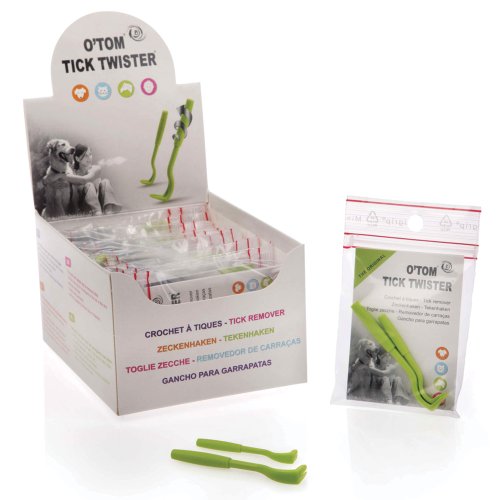
There are a couple of very good and cheap tools available that make removing a tick safe and easy – I carry with me the O’TOM TICK TWISTER, This little gadget costs under £4 inc VAT & delivery and is by far the best method I have found for tick removal.
It is very compact and I keep them in my first aid kit. taking up next to no room at all. So far they have worked perfectly each time I have used one.
* Ways To Prevent A Tick Bite
1. Use an insect repellent.
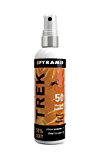
Always use insect repellents that are 20 to 30 percent DEET, as this is undoubtedly the best repellent against ticks.
Use anytime in wooded areas, places with lots of bushes, or areas with high grass cover.
Also spray your clothing, backpacks, hats and other gear. Although it may be a bit sticky, deet spray is by far the most effective against ticks and other nasties.
2. Check for ticks daily.
This sounds obvious, but a lot of people forget. It is also the most important thing you can do against tick attack.
A ticks must be attached to your body for 36-48 hours to transmit the disease, so it makes sense how important it is to check for a tick as this method can go a long way toward preventing the disease.
You must do a full body search..!
Top to bottom, head-to-toe tick search will make sure your tick free each night; A tick, being so naturally small, can easily hide in the smallest of places.
They will hide in the hair, in the armpits, in the groin area, and even inside your ears.
3. Shower after outdoors activity (preferably within 2 hours).
This can easily wash away ticks, but more importantly, it will give you a chance to do a full head-to-toe check.
Wash clothes or throw your gear into a hot dryer.
Some other symptoms to look out for are: fever, chills, muscle or joint aches and swollen lymph nodes.
Of course, there are plenty of other causes for these exact symptoms, but if you have been in the outdoors it's always best to be on the safe side and visit your doctor.
* Useful Video Advice
This is a very useful video - from Lyme Disease Action, and very well explained.
It's also worth cleaning the area with an antiseptic wipe, and even applying some antiseptic cream, that way you have covered all the bases.
* Enter your name & a valid Email address
* You will receive an Email titled 'Preppers Newsletter Subscription'.
*Simply confirm, and you've joined our community of preppers.
Safety First Aid For Preppers
What is the best emergency first aid survival kit a UK prepper can have?
Firstly, your kit must ensure that essential safety first aid can be given to either yourself or any other injured person.
Which means that a good emergency first aid kit cannot be just thrown together. In fact it can be quite personal to you and your situation.
It must be thought out to ensure emergency first aid equipment is the most appropriate for the conditions that you are liable to encounter if faced with a SHTF situation

* No:1 First Aid Essential Items
Without a doubt, the number 1. most essential first aid items is going to be your own medication. You cannot function if you are the one who is ill.!
If you need certain pills or medication to help your own health, then that has to be your priority before all else.
This may well mean you need to be stocking up to ensure you have supplies in advance and before you need them.
It is normally OK to get a three month supply from your GP, more if you say you going away on holiday.

* A Standard First Aid Kit Covers Many General Options
There are many types of 'off the shelf' emergency first aid kits that come close to what you may need, but it is pretty certain you will need to add too and improve your survival kit in readiness for your particular situation.

Typically, a Family First Aid Kit, shown here, will cover a most of your needs as a non-trained first aider, and will only set you back £15 or so. But remember, it will always be a very basic kit.
That means you are very limited as to what can be used, and you will invariably find you do not have the right equipment with a basic kit.
It can be a starting point for everyone. But you must add more essential items to your kit to be effective.
Some people will buy an 'off the shelf' kit from the start, while others will build from scratch. Either way a comprehensive first aid kit is on of your most important pieces of survival gear.
Do not scrimp on this equipment....
* What Are The Main Factors When Choosing
The main factors that will decide the level of your safety first aid kit.
- Are you trained in emergency first aid
- If you are trained in emergency first aid – to what level
- How long ago were you trained – are you up to date with modern emergency procedures
- If you were confronted with an emergency would you help the injured person
If you answered ‘no’ to questions 1 & 4 then the type of safety first aid kit you need is just a 'basic, of the shelf’ pack that covers the very basic of injuries.
This type of pack, like the Family 1st Aid Pack above, is quite well equipped for a standard 'low level' emergency first aid kit, but contains only the very basic safety first aid essentials.
Although it's relatively cheap, at under £15, it will be sufficient for your needs as a non trained first aider dealing with a low level emergency (small cuts, sprains etc.)
Whatever your level of first aid training - for MOST emergency situations
"Poor first aid, given today, is far better than good first aid tomorrow"
Essential safety first aid requirements for any UK Prepper
- Enrol in one of the many first aid classes and learn how to administer good first aid
- Practice your emergency scenarios regularly
- Evaluate your own emergency first aid survival kit requirements - exactly what do you need in your own kit.
- Buy a good first aid manual - one for home and one kept with your safety first aid kit
- Download a first aid manual to your smartphone for emergency use and reference
* Typical entry level first aid kit
Here are the contents of a typical 'off the shelf' first aid kit. These type of kits come with a good holdall that is very handy, and generally OK for the kit that's inside.
They will contain a fair amount of useful equipment, as well as scissor, tweezers and safety pins, and is very well priced at under £20
The contents form a good base from which you can build on to get a good kit together for your needs.

* Considerations For Choosing Your Survival First Aid Kit
Consider your location and where you are liable to go to should SHTF and ensure you have the correct first aid supplies that meet these needs.
An example would be if you foresee bugging out into the forest then you must carry insect bite creams and anti-histamine creams, as well as protection for stings and bites.
Maybe consider some good tweezers for splinters and even a good magnifying glass to help see them.
You location plays a big part in putting together a safety first aid kit – and what about the weather?

Your kit needs to be seasonal as well, this will mean changing the contents to ensure you have the correct items for first aid.
This would mean sun tan lotions and creams, lip balm and after sun creams too. Of course the reverse is true for a winter bug out as well.
If you are on any personal medications then they will take priority over everything else.

You must ensure you are fit and well enough at all times - you must have enough medication to survive at least twice as long as your anticipated time.
As a general rule for a 72 hr bug out bag carry at least six days of your own personal medications.
Once you have established your essential items you can then go about choosing an appropriate safety first aid survival kit that suit your needs best.
* What Emergency First Aid Kits Generally Contain
Typical family first aid kit is a basic requirement to have, and contains the items below:
2 x Instant Cold (Ice)
2 x 15ml Sterile Eye Wash
2 x Sterile Eye Pad 6cm x 8cm
2 x Bandages 7.5cm x 4.5m
2 x Triangular Bandages 96cm x 96cm x 136cm
2 x First Aid Tape Roll 1.25cm x 4.5m
3 x Wound Dressing 10cm x 10cm
2 x Crepe Bandage Roll 7.5cm x 4.5m
30 x Adhesive Plasters 1.9cm x 7.6cm
20 x Adhesive Plasters 1.0cm x 4.0cm
1 x Foil Emergency Blanket 130cm x 210cm
3 x Non Adherent Pad 3" x 3"
10 x Antiseptic Wipes
2 x Pairs of Medium Gloves
1 xPlastic Tweezers
1 x Medical Scissors
10 xsafe pin
1 X CPR Face Mask
A kit with this equipment inside a carry bag will cost around £20
* Improvements & Additions You Must Make:
These improvements need to be more specific to you and your families needs.
Certainly doubling and trebling up on some of the items is a must or go for a higher specification safety first aid kit that includes much more – this will come with a larger carrying bag as well.
But, one of the more common injuries that will happen are blood related injuries, so be prepared for that..
The emergency first aid items below are a 'must have' to add to your kit:
Creams & Anti-Septics
These may vary due to personal use, but certainly need to be added to your kit.
Keeping a wound as sterile as possible is not always that easy, but adding an anti septic cream is going to help a lot.


Vinyl Gloves
I would definitely add some more vinyl gloves to your kit.
These are quite essential to stop any dirt getting into wounds as well as protecting you from any nasties that could infect your body, especially if you have a cut on your hand.
As well as that, vinyl gloves also have other uses - for carrying water or keeping things dry -very handy items.

Adhesive Sutures
Closing a larger or deeper wound is not an easy task, especially if you want to do it fast and efficiently.
These Steri-Strip sutures make the job much simpler, especially for an untrained person.
They are fast to apply and use, and work well in an emergency.

Blood Clotting Pad
A deep cut is a very high risk and the loss of blood can be critical.
Adding a clotting agent to your first aid pack is another essential add-on.
Both the clotting powder and pads work well in an emergency and are a must have in you pack.
Duct tape and even super glue are also worth considering in a survival situation - as we all know, duct tape solves everything!
From a wound dressing to an arm sling to a stretcher... don't leave home without it..!

Trauma Wound Dressing
An accident involving a deep, severer cut is very high up on your emergency list, and so is being able to stop the flow of blood.
A trauma wound dressing, sometimes called an Israeli Bandage, is another essential addition to your emergency first aid pack.
A wound dressing like this one is capable of stemming even the worse of wounds.


The Israeli Bandage is a standard issue for the military, and you should carry one and learn how to use one as well.
The bandage has lots of various uses all over the body and is suitable for young or old people.
They are available in a 6" bandage and also a 4" bandage.
Tourniquet
Another essential item for your first aid kit: the tourniquet.
This is a one hand operation system that will help stop blood flow from a serious wound.
Combine this tourniquet with the clotting pad and an Israeli bandage and you have all the bases covered for tackling most major blood injuries.


* Essential Safety First Aid Reading
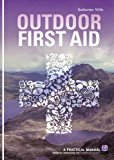
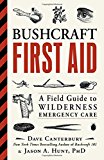
The St John Ambulance run many courses for all levels.
I think this an absolute must for any prepper.

But in the meantime get yourself a Safety First Aid kit, even a basic kit to get you started, something you can build on later, because you just never know when SHTF.
* Enter your name & a valid Email address
* You will receive an Email titled 'Preppers Newsletter Subscription'.
*Simply confirm, and you've joined our community of preppers.
Over The Counter Essential Preppers Medicines
In a SHTF situation my first response would be to ram raid the nearest chemists...!
Without some of the simplest medication in your stockpile you are reducing your chances of survival by a huge amount.
So ask yourself: is it really worth stockpiling over-the-counter (OTC) drugs?
My answer to that is a resounding - Yes.
Of course I also have to add that I'm no doctor or even vaguely medical trained, but I don't think you have to be in order to see the common sense in what I'm saying about being prepared....
*see full disclaimer here
I have chosen the top OTC medication for simple reasons, and that is their readily available and affordability for everyone, and they are quite safe for both adults and children to use in the appropriate doses.

Over The Counter medicines can be used alone or in various combinations, and as such can treat literally dozens of common conditions.
Here are just a few examples of conditions that your normal over the counter medicines will help:
- Fever
- Head ache
- Pain
- Sore throat
- Allergies
- Rashes
- Infection
- Dizziness
- Vomiting
- Diarehea
- Cramps
- Anxiety
- Congestion
- Backache
- Arthritis
It is very unlikely that you don't have some emergency medication at home already.
Most people will have some Aspirin or Ibuprofen, as well as something for bites and strings - this is quite common.
But it is very important to make sure you have a good stock of the most essential OTC medication to cover as many emergencies as possible.
A lot of the list should also be carried in your Bug Out Bag and EDC Bag.
*remember, we are not talking personal medication here.
That is a whole other subject - medication you need to keep yourself fit and well must be stockpiled and specific to your own personal needs.
Never neglect these and try to keep as much of a supply as you possibly can, and keep it topped up at all times.
Pain medication
One of the top medications to stock up with at home and definitely in your BOB.
Include a variety of different types of pain control medication such as Aspirin and Ibuprofen.
Pain killers will be a huge help to yourself and any member of the family if the SHTF.
But also remember they will have good barter value and become a sort after item to use for trading.


Antibiotics medication
In a post-SHTF scenario, a lot of people will die of secondary infections and for a lack of the basic antibiotics we take for granted now.
Generally they are only available with a doctors prescription as well as being quite expensive.
The preppers answer is simple.
Buy from a pet shop or vet, and ask for antibiotics such as FishMox or FishPen, they are amoxicillin and penicillin, respectively.
These antibiotics are the same as the ones a doctor will prescribe and I would suggest you research this fact before buying any as I have done. The pills themselves even have the same code numbers on them!!
Vitamins & Minerals
Maybe not a medication in the true sense, but absolutely essential supplies to keep.
Stockpile the basic Mutli-Vitamins and ensure they are high dosage.
Vitamin C and Vitamin D3 are particularly essential to boost the immune system, something you would definitely need in a high stress SHTF situation.


Other main medication
- Antihistamine - allergy & bite relief
- Imodium - diarrhea and stomach upset
- Sudafed - congestion relief
- Hydrocortisone Cream - rashes & inflammation
- Antacid - stomach nervousness & upset
- Sleep medication - stress relief
ACHES, PAINS, AND HEADACHES
In a SHTF situation your stress levels will be through the roof.
Very likely causing other unwanted and painful symptoms to appear.
Most Over-the-counter medication will normally cope with all these type of symptoms quite effectively and will help you with headache, arthritis pain, sprains, and most other minor joint and muscle related problems.

- Paracetamol, also know as Acetaminophen, APAP -
An essential OTC medicine for your pain. Do not take more than 4 grams (4,000 mg) on any one day. - Nonsteroidal anti-inflammatory drugs (NSAIDs).
Non Steroid Anti Inflammatory Drug - NSAIDs, such as ibuprofen and naproxen, without a prescription.
Both APAD & NSAID'S can have serious side effects. ESPECIALLY if you take them in high doses or for a long time.
FEVER
Use Acetaminophen (Tylenol) and ibuprofen (Advil, Motrin). Both will help reduce a fever in adults and also children.
- Acetaminophen taken every 4 - 6 hours.
- Ibuprofen taken every 6 - 8 hours.
DO NOT give ibuprofen to children who are younger than 6 months. - Make sure that you know how much you or your child weighs before you give any of these medicines.

Aspirin will also works very well when treating a fever condition in adults.
COLDS, COUGHS & SORE THROAT
Most Cold medicines will only treat the basic symptoms and help to make you feel a bit better, but they do not however, actually shorten the cold itself.
These irritating ailments could be signs of a run down body in a SHTF scenario, hence vitamin supplementation is essential as well - so stock on vitamins and mineral tablets.

** It is well worth taking zinc supplements within 24 hours of the cold actually staring to show itself.
Zinc supplement may well help reduce the symptoms and also the overall duration of a cold.
Cough Medicines:
- Guaifenesin:
Is a medicine that will help break up the mucus buildup.
Be sure to drink lots of fluids if you take this particular medicine. - Menthol throat lozenges:
The old favorites - Soothing antiseptic relief in the throat. (Halls, Robitussin, Vicks) - Use a liquid cough medicines with dextromethorphan:
This will suppress any urge to cough, causing more pain and inflammation: use (Delsym, Simply Cough, Vicks 44,Benylin, Robitussin DM, and store brands)
Sore Throat Medicines:
- Use standard sprays which will help to numb pain: ; phenol (Chloraseptic), dyclonine (Cepacol)
- Use standard painkillers to help numb the pain: ibuprofen (Advil, Motrin), naproxen (Aleve), acetaminophen (Tylenol),
ALERGIES
Without a doubt most good Antihistamine pills will work well for treating allergy symptoms - Antihistamine liquid will also work well in treating allergies and rashes.
With the lack of any rubbish disposal and general living conditions going from bad to worse, it's almost a gimme that sanitation will be poor and the risk of contagious rashes from non sterile piles of rubbish is high.
Be aware though - there are two types of Antihistamine you can buy over the counter at the chemist:

- 1/ Antihistamines that can cause you to become drowsy and cause sleepiness:
dipenhydramine (Benadryl); chlorpheniramine (Chlor-Trimetron); brompheniramine (Dimetapp), or clemastine (Tavist). - 2/ Antihistamines that will have very little or no effect to your alertness and causes very little or no sleepiness at all:
loratadine (Alavert, Claritin, Dimetapp ND); fexofenadine (Allegra); cetirizine (Zyrtec).
It's also worth considering :
- Eye drops: These will help to soothe or moisten the eyes and help relieve itching.
- Use a preventive nasal spray:
cromolyn sodium (Nasalcrom)
SKIN RASHES AND ITCHING
- Antihistamine pills that are taken by mouth should help with the itching or if you have any other allergies.
- Hydrocortisone cream, applied to the rash should help relive the itching as well(Cortaid, Cortizone 10)
- Anti-fungal creams are worth considering:
These are creams or ointments: and help with rashes caused by yeast
(nystatin, miconazole, clotrimazole, and ketoconazole).
DIARRHEA, NAUSEA & VOMITING
DIARRHEA
In a real SHTF condition, the levels of everyday sanitation will rapidly spiral downwards.
There a real risk of dehydration and all its complications which can easily follow very quickly.
Along with Antibiotics, diarrhea treatment is your top concern and must be addressed to prevent major problems.
Medication that must be stocked:

- Anti-diarrhea medicines such as loperamide (Imodium):
These type of medicines will help to slow down the action of intestine and thus reduce number of bowel movements. - Other medicines that contain bismuth are worth being stocked:
These may be taken for mild diarrhea symptoms; (Kaopectate, Pepto-Bismol) - Also include some Re-hydration fluids:
Useful for moderate and severe diarrhea (Enfalyte or Pedialyte)
NAUSEA AND VOMITING
- Most liquids and pills that are used for stomach upset can also help with mild nausea and vomiting (Emetrol; Pepto-Bismol)
- Rehydration fluids will come in handy to help replace fluids from vomiting
(Enfalyte or Pedialyte) - Also consider storing medication for motion sickness: these will reduce the urge to vomit,
dimenhydrinate (Dramamine); meclizine (Bonine, Antivert, Postafen, and Sea Legs)
There are several other types of medication to also consider that are worth stocking up on, mainly to make your post apocalyptic life easier..!
- Energy tablets
- Sun tan lotion
- Insect repelant
- Insect sting ease
- Ear & Eye drops
- Antibacterial gel / cream

Get the best deal
Finally, always check the expiration date (best before date), on everything, and pay special attention to any liquid preparations as these seem to differ quite a bit.
Although medications do not necessarily “go bad” once they have reached their “Best if used by” date on the bottle, it is definitely desirable to acquire your OTC medication that have a good long expiration date.
Stock rotation may not be that easy with medication!

How to store your medication
- Heat, air, light, and moisture may damage your medicine.
- Always store your medication supplies in a cool, dry place.
Avoid storing in the kitchen cabinet or near the cooker area, sink, and any hot appliances.
Far better to store medicine in a storage box, on a shelf, in the dark with other preps. - Never store medication in your bathroom cabinet.
Heat and moisture from your shower, bath, and sink can easily damage your medicine. - Pills and capsules are easily damaged.
Heat and moisture will break down pills into vinegar and salicylic acid. - Absolutely always keep your medicine in their original container. Never swop bottles.
- Remove the plug of cotton wool out of the medicine bottle.
This cotton ball will pull any moisture into the bottle.
All the above are Over The Counter Medication available to us all that will eventually run out.
This form of natural medication has been passed down through centuries of tried and tested methods, and best of all it's free..!
It is well worth considering taking the time to learn about the world of the natural medicinal plants that are also available to us.
After all there are literally hundreds of medicinal herbs that will cure many ailments, with many recorded and dated back as far as the Egyptian times of 1550 BC.

Remember, we are talking Over The Counter medication here, and as such it's generally bottles of pills or ointment.
Herbal medicines are also a great alternative way to treat many symptoms and ailments and may well be the only methods available once your supplies have run out.!
Happy Prepping Folks.
Steve