Best Solar Powered Radio

A radio is an essential and very necessary part of your survival gear.
In any disaster situation you must be able to keep up to date with the latest information to ensure you are able to keep ahead of any trouble, and the humble radio is the first choice, more precisely a solar powered radio, in keeping yourself informed and a prepper 'must have', whether at home or in your bug out bag.
Many radios only work on standard batteries, and as such, are frowned upon by preppers as something to be avoided if at all possible. Their lack of longevity makes the battery powered radio pretty useless.
But, for longer term survival situations, the answer is to look for the best solar powered radio that eliminate the need to replace batteries.
Why is a radio so important?
Every bit of information you have at your disposal enables you to make specific, informed decisions.
These decisions could affect your overall strategy in a disaster or SHTF situation.

There is, of course, no guarantee that the information broadcast during a disaster is actually the correct information at all, and with all the 'fake news' that's around you have to be careful.
It could quite easily be government propaganda designed to mislead and cajole you into a false sense of security.
But whatever it is - it's information for you to process and assist you to make survival decisions.
On the face of it
just about any radio is a good radio,
so long as it's working.
Of course, as preppers it is important to have equipment working 100% of the time.
Bands
There are radios that will give you a weather band, this is very handy. AM/FM and shortwave are pretty standard,
Physical Size
Don't pick a radio that's to bulky.
To get decent sound and volume the speaker needs to be a decent size, but, you might want to be able to put the radio in a your pocket or in a small side pocket on your rucksack.

However, for SHTF entertainment or if you want to be listening with the family then get a slightly larger radio.
But remember - the bigger the speaker, the more power it is going to use.
Power Consumption
An emergency radio is essential, but it also needs to last a long time with very little demands in terms its of power consumption.
It is preferred if there is some way to power the radio,this leads us to have a hand crank or a solar panel already built in.
Using solely a battery-powered radio as your main power source is a bad idea.
If you do, then go for one that takes AA or AAA batteries, the most common battery sizes and definitely use rechargeable batteries, and don't forget, keep them topped up.

As well as not requiring batteries, your radio needs to offer as many other features as possible to make it a true piece of prepping kit - these 'extra' feature would include:
- Solar charged
- Wind up charged
- Built in torch
- Earphone socket
- USB charge outlet
- Mobile phone charger outlet

Most preppers prefer the combined solar and wind up radios as these give you two choices to power the radio.
The sunlight will charge your radio during the day and if it’s used at night time and the charge gets low you can hand wind to keep it recharged.
I think having the two options is a must for prepping. There must be a limit to the number of winds for maximum playback time, but I've never tried that to find out..!
My personal choice for the best solar powered radio: is the Duronic Apex Digital Wind Up/Solar Radio, shown below:
It ticks all the boxes for me.

As you can see, it is compact, fits perfectly in the palm of my hand, and is very nicely laid out, the dials and controls are straightforward, easy to use, and it picks up the radio station easily.
Also, it will easily fit in the map pocket of a pair of combat trousers.


When you first get your solar powered radio I would suggest giving a full charge using the USB charging port on your pc to start with. That makes life a lot easier.
When it comes to solar radios, the charge times will vary from make to make and also from day to day.
The quality and amount of sunshine the solar panel absorbs has too many variables to really give an accurate playback time, but I have never had any problems when I leave mine out in during the day.
Using the additional wind up method is very handy and I have found that 30 seconds of winding the hand crank will give 9 minutes of playback time.
If you use the built in torch or the phone charging socket this is reduced considerably.
Best Solar Powered Radio Comparison
# 1 - DURONIC APEX WIND UP / SOLAR POWERED RADIO - £20

Torch
Phone charge socket
AM / FM radio
Hand Crank wind up
Earphones socket
Alarm
Charge indicator
Shower proof *not fully waterproof or submersable.
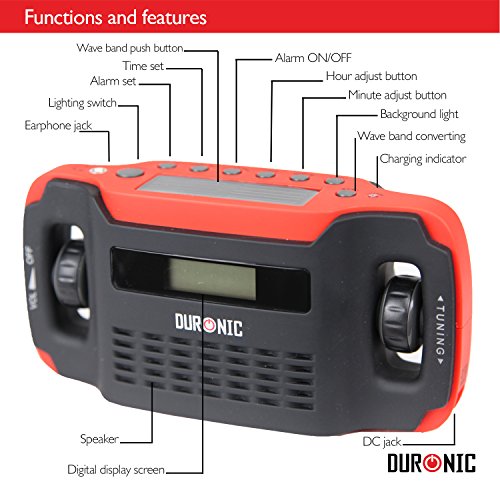
This Duronic Apex is an all round 'good guy', with all the features you will want when stuck out in the wild or on prepping practice.
I would consider reception to be average and on par with most other radios I have used heard.
In the basic radio mode you can expect a good run life, however, when using the torch or charging socket that time is reduced considerably.
So a good days charge is really essential to get the best out of it
The torch is more than sufficient for night time use with three LED units which give a good sharp beam of light.
The radio tuning and time are back lit which is nice for night time viewing.
There's also a master on/off switch on the base which is very handy and stops you accidentally switching the unit on and wasting charge.

Overall value for money I give this 5 stars:
For the latest prices please click here:
Duronic Apex Solar Radio
# 2 - FREEPLAY ENERGY COMPANION - £27
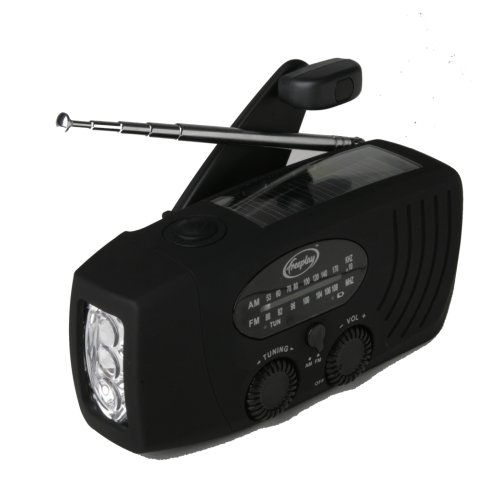
Another 5 star contender for the best solar powered radio.
The Roberts Freeplay is a rugged outdoor radio with added benefit of being waterproof, although I haven't actually fully submerged one yet!
Torch is average. LED lights give a decent beam, but will drain the battery faster than the radio does - so use wisely or you'll be forever winding it up.
I like the shape and simplicity, but unfortunately the tuning window isn't back lit for night time.
Torch
Phone charge socket
AM / FM radio
Hand Crank wind up
Earphones socket
Alarm
Charge indicator
Waterproof

Overall, value for money, I would give this an easy 4 stars:

#3 - Degen DE13 - £22

Torch
Phone charge socket
AM / FM radio
Hand Crank wind up
Earphones socket
Alarm
Charge indicator
Shower proof *not fully waterproof or submersable.


Another solid bit of survival kit.
The Degan has all the feature of the 5 star Duronic and is on par with the price at £22
Fairly lightweight at 256 grams and measuring in at:133 x 62 x 47mm (WxHxD) it's still one to consider.
Overall, value for money, I would give an easy 4 stars
For the latest prices please click here:
DEGAN Solar Radio
# 4 - ROBERTS DAB/FM - £85

The Roberts DAB solar radio is not really a preppers / survival type of radio, but I think worth mentioning to give an example of what's out there on offer.
With this radio it's more about sound quality than actual survival and practical use.
Being a more top end radio you will be paying a premium for the DAB function, and it comes in at around the £65 mark.
It will work and give you a good quality radio reception powered by solar (mono through the radios one speaker or stereo through the earphones)
Torch
Phone charge socket
DAB + AM / FM radio
Hand Crank wind up
Earphones socket
Alarm
Charge indicator
Shower proof *not fully waterproof or submersable.
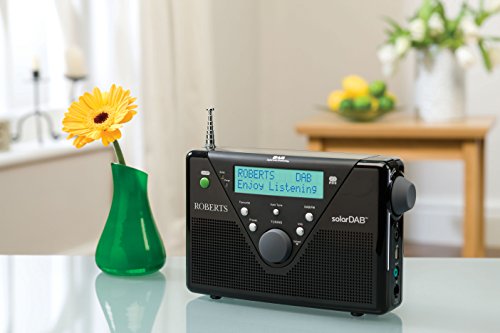

Overall value for money I give this 3 stars:
For the latest prices please click here:
ROBERTS Solar Radio


How To Prepare And Survival An Electromagnetic Pulse

An Electromagnetic Pulse (EMP) is, simply stated, a burst of electromagnetic energy.
It can occur as a radiated, electric or magnetic pulse.
There are also Naturally occurring EMP’s which can be caused by lightning and from electrostatic discharges when two charged objects come in close proximity, or by making contact.
* How Is An E.M.P. Caused?
An EMP can be cause by a surface or atmospheric nuclear detonation
An EMP can also be man-made, and equipment designed to produce an Electromagnetic Pulse would be used to target specific buildings, installations and equipment.

To create an Electro magnetic pulse over a large area an atmospheric nuclear detonation is considered the the most likely and would be the logical choice.
A rocket would be launched into space and the nuclear warhead would be detonated at a certain distance above the earth’s surface.
High altitude nuclear explosions have already been tested several times by the USA and USSR between 1958 and 1962, as a result of their nuclear weapons testing programs.
All test resulted in a measurable EMP that caused electrical damage over a large area.
* What Are Solar Storms?
Solar Storms And ElectroMagnetic Pulses Go Hand In Hand
A major solar storm going to be inevitable at some time, according to most experts.
A solar storm will cause an electromagnetic disturbance and a large EMP would be enough to easily cause widespread destruction of any country’s power grid.
However, while a solar storm of a large enough magnitude could very well destroy a large portion, if not all of the world’s power grids it poses little threat to electronic gadgets, and will not disable automobiles, planes or trains.

Power companies do have the technology to protect power grids against a solar disturbance.
However, whether they have or will do so at some point remains to be seen.
Once damaged by a solar disturbance the worlds or any nation’s power grids would take years to repair if they could be repaired at all.
* How Does An E.M.P. Effects You
Today a few pounds of enriched plutonium launched into space on a satellite in place of its cameras would cause widespread devastation worldwide.
The effects would be greater as well because today everyone has an ever-increasing dependency on electricity. Some rely wholly on it for the basic maintenance of their lives.

There is a very strong belief that any long-term loss of the electrical system would put the world or a country back 150 years.

However, keep in mind there was not any infrastructure to speak up 150 years ago, so people knew how to survive without electricity.
Therefore, a long-term outage would put us back half of a millennium or more because of our lack of knowledge on how to survive without electricity.
No one today truly knows whether the world or a country can survive without electricity because no one alive today has ever had too.
There will be casualties caused by the effects of a pulse.
A widespread loss of electricity will cause mayhem in any community.
Hospitals and care centres will not be operational because backup generators will not operate, lifesaving equipment would fail and be nothing would work.
Emergency services will be shut down as well, loss of comms and transport grinding them to a halt, which means no law enforcement or emergency response to medical emergencies.

Battery operated torches and radios will cease to work if they have an electronic circuit board in them.
Most automobiles manufactured after 1960 will not operate unless the vehicle was shielded.
Aircraft can fail in flight because any navigational aids would be destroyed seconds after an EMP.
Smaller aircraft can be flown without instruments, but many commercial jets and other aircraft rely on electronics to navigate. Only those that can fly by dead reckoning without instruments would have a chance of landing safely.
Literally, an Electromagnetic Pulse could mean aircraft would be falling from the skies causing untold numbers of fatalities.
People not prepared could very well succumb to hypothermia and hyperthermia.
Dehydration will be a threat for many in a matter of days as well as starvation in the days after. Mobile and landline phones will not function and any hand-held communications devices unless properly shielded will not operate after an EMP.

Prepare to live without electricity, which means you as an individual or family are on your own in the first few weeks, months or possibly years.
You must be self-sufficient enough to survive until the damage can be repaired.
You have to remember that any task you complete today using electricity will still have to be completed in the days after the power goes out.
* The Faraday Cage

The Faraday Cage or Faraday Shield is simply an enclosure used in order to block out an electrical field and a way of protecting electronic equipment from an EMP.
The Faraday cage was named after the English scientist, Michael Faraday, who invented them in 1836
It can be as simple as wrapping a device in aluminium foil. The cage must be made of a conductor of electricity ideally copper, aluminium or steel.
The items protected should be nested inside the cage with Styrofoam or other plastic material without touching the metal walls. Ground the metal cage if possible.
If using foil, wrap the devices and then place in a plastic bag/other plastic material and then wrap again in foil. The more layers of foil and plastic you have the greater protection afforded.
This is a very rudimentary shielding method but can be used when no other materials are available.
There are going to be certain items that are essential to protect from and EMP, and as preppers these must be stored away.
Far short of building yourself a Faraday Cage to fit everything in, it is better to individually pack and store the most needed items.
To do this you must try to imagine life without any power. This gives you an idea of what is essential to protect.
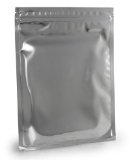
Two way radios, solar chargers, smart phone (with all survival information loaded), batteries, Radio, Torches/Lanterns - all essential survival equipment.
Packing these items individually into Faraday pouches like the one shown above will protect from an outside electric source like an EMP.
These shielded bags come in all different sizes from small pouches to fit an iPhone in, right up to the 10″x 15″ sizes and more.
Protecting your electrical equipment is essential for your future survival, plus its going to make your life a lot easier in the long run.
* DIY Faraday Projects
Get yourself an anodised aluminium rubbish barrel, sold at every garden center or simular.
This can then be made into your shielding device by grounding the bin with an earthing rod and wire, or even burying it in the ground so the lid is at least a half of a meter under the soil.
If you also add a plastic liner inside (this can be a smaller bin that fits inside), and place all your sensitive electrical items in the plastic bin.
Still try to place them so they do not make contact with the sides.
You could also use plastic cases or even styrofoam pieces or bubble wrap to insulate the items in the 'cage'.

Your household microwave oven can also be used as an effective Faraday cage.
Place in in a metal box and ground the box to earth and it will be double secure as well.
Then all you need to do is place your sensitive electrical items in the microwave and and close the door.
If you don't have a large metal box to sit it in, then simply position the microwave near a metal water pipe (water pipes are always earthed), and then run a length of earth wire from the microwave and solder to the water pipe, this will create a earthed ground connection.

What will happen is the EMP will flow over and around the box or microwave and then try to find the shortest route to the ground. The metal piping will give this route and bypass your items inside the cage.
An Electromagnetic pulse will destroy computers, your USB devices, as well as hard drives. In effect it will fry and make inoperative, just about any device that has an electronic component within it.
The only way to protect it is to ensure it is shielded in some way.
However, as a side note here, there is some conflicting view regarding whether it is necessary to ground the cage at all.
Instead, providing the cage is totally sealed with no perforations, simply allow the cage to discharge naturally.
* Communications & Radio
In a SHTF situation communication is vital, as is using two way and ham radio.
Both types radios are very important and absolutely necessary for keeping everyone updated.
It is essential that you and family members are able to keep in contact and, also be able to monitor the airways for any public information that will help you stay safe..
Along with your radio devices, all torches, and all other battery-operated survival devices are well worth adding to your faraday cage if possible.
Don't forget batteries - they will fry and become useless in an EMP, so shield them too.

The internet and all mobile phone networks will be effected as well, so don't rely on comms via your phone.
* Transport
Major disruption for all transport systems will occur in an EMP strike. Causing untold disruption and confusion.
You vehicle will suddenly lose all its electrical and electronic controls and die. Leaving you high n dry wherever you find yourself at the time.!
Driving at 70mph or parked in your garage, it will be zapped, and rendered useless, and that includes the battery as well.
It is almost impossible to try to shield a full sized vehicle and very unpractical as well. Although it would be quite possible for smaller modes of transport, typically a small motor bike or scooter could have its own cage and be shielded.

When an EMP stike happens it would bring vehicles to a standstill, meaning the roadways will be clogged with unusable cars, bikes, lorries and, more worrying, emergency vehicles.
People could be literally miles away from their home and totally stranded.
* What To Do Now
As preppers, most of the general disaster scenarios will be covered. Certainly enough for you to ride out the first month or so.
But for others, an EMP would mean total disruption and a very real struggle for survival even to stay alive, in what could be compared to living in the dark ages.
As an EMP would mean no electricity, just about every service we come to rely on would be shut down. The whole infrastructure would crumble, pretty much instantly - think about it for a minute. Every single thing you do relies on electricity at its source.
It really is a frightening thought. Along with the panic and the looting, there will be no way of knowing what is happening and how long things will last before help comes.
Personally, I don't think help would come at all.

* Equipment & Supplies
You always have to assume the worst otherwise you would never be prepared.
You should have at least a 90-day supply of food, water, medicines and medical supplies. Once people realise there was an EMP, panic will ensue and the shops and other establishments will be looted quickly. You will not be able to go shopping to get anything at this point.
The pulse itself is not dangerous to you physically but the results of the pulse will be. The thing you need to fear the most in some cases will be other humans once desperation sets in. Keep the fact you are a prepper and therefor are well supplied a secret from everyone.
You need protection from the cold so have plenty of blankets/thermal blankets and wood or coal if you have a fireplace/stove. Most people rely on the village main for their water supply so you may not have running water. Private water wells are one option if you have the means and property to have one dug or drilled and remember you will need to have hand water pumps installed.
Charcoal or bottled gas is an option for cooking and gas can be used for heating in some cases but you will not be able to resupply. Of course, you can only cook using charcoal or wood outside.
Laundry and bathing will be a problem because of a limited water supply and not having the ability to heat water efficiently. Hand wash clothes and bathe using collected rainwater. You can place water collection barrels to capture runoff but ensure the barrels are screened to filter out debris and prevent insect breeding. Use large kettles to heat the collected water for laundry and bathing. It is impractical to think you can store enough water in jugs to sustain you indefinably so you will have to develop alternative means of obtaining water.
* Will An EMP Kill Me?
Certain 'rays' like radar and microwave radiation can actually cook flesh, so this type most definitely needs to be avoided at all costs.
If you think of a stun gun as an example:
You find that even a 4-watt TASER stun gun is capable of causing severe muscle contractions, and will easily override the bodies central nervous system and affect all the muscles throughout the body, but fortunately these type of devices won’t kill you.
When it comes to an ElectroMagnetic Pulse - A short duration pulse EMP should pass through the body with no effect.

The correct conditions required are simply not present in an EMP derived from a solar flare, nuclear detonation, or any electromagnetic weapon to produce damage to the body.
The reason an EMP does not damage the body is due to the duration of the pulse. A quick EMP pulse would simply pass right through.
To cause any bodily damage you would require a sustained magnetic field. That field would need to be constantly increasing in magnitude thus causing current flow for at least a few milliseconds. However, this isn't really considered to be a pulse.
Research and the governments technical threat assessments have conclude that an EMP passes through you so fast, that the current cannot begin flowing in your body to cause harm.
So panic over.... It's not worth being too worried that EMP can frizzle you. Your body should be fine, with no after effects. However, it's not you that needs protecting - it's protecting your electrical and electronic systems.
Without electricity the whole world infrastructure would fail overnight and and total collapse would be a certainty, leaving the world a whole new place to try and survive in...!

* Enter your name & a valid Email address
* You will receive an Email titled 'Preppers Newsletter Subscription'.
*Simply confirm, and you've joined our community of preppers.
This could Be The Best Solar Cooker
For Preppers And Survival Ever..!!

In the past I have been out, in the woods, trying out new bushcraft and survival skills and often thought that watching over my food to make sure it doesn't burn, can take up a lot of my time.
Although I do like a nice camp fire, and really enjoy cooking over an open fire, it really isn't a 'time productive' way to prepare a meal when theres so many 'other' thins to be getting on with.
I know the open camp fire is at the very heart of survival and bushcraft, but sometimes you have just got to move into the 21st century.!
Hence I decided to try out ( and review ) the GoSun Portable Solar Grill

Enjoying a nice camp fire.
Cooking meals when there's no power or any fuel source available is obviously a big problem.
So turning to a free, readily available source of energy can only be a good idea.
There are only really two working parts to the GoSun - the polished 'parabolic' curved metal reflectors, and the main cooking tube.
The cook tube is the heart of this system and is made from heat proof Borosilicate glass.
Now, I don't really know what 'Borosilicate glass' is, so if your a bit of a boffin and want to know more - here's the link to some Wikipedia info: What is Borosilicate glass
What I do know, however, is the glass tube get very hot inside. Up to 550 DegF ( 280 DegC ) - now that's more than enough to cook meat and any other food - it actually works out around 230 Watts in full sunlight.
Traditional meat cooking method:

The meal I cook in the review video is chicken with vegetables. Two nice sized chicken breasts and fresh vegetables, nothing pre-cooked.
I could just as well of used any meat and, in a survival situation, a freshly caught rabbit or fresh fish would be ideal for this cooker.
But, I must say, it was far easier than the normal bushcraft method for cooking rabbit..!!
Here is an example of typical cooking times,
relevant to the amount of sunshine time,
using the GoSun Sport Solar Cooker.

My Video Review Of The
GoSun Solar Cooker


As you can see in the video,
the GoSun Solar Cooker performed perfectly
and cooked a very good meal, without any interference from me...
In a survival situation, where your time is of the up-most importance, a cooker that can just be left on its own is a great asset to have with you.
I am sure with a little more use and practice at cooking different meals, I could become quite accurate at estimating the cooking times as well.
I think the GoSun is a piece of 21st century technology that we can all use to our advantage, and is versatile enough to be used for many situations, and not just whilst out camping.

I can see this cooker being a preppers dream in a SHTF situation, or in a lesser situation, you could make very good use of it during a power outage.
The amazing thing about it is it will still cook on cloudy days..! Granted, it's going to take longer, but if you have no power source it's going to be your number one choice.
Obviously hiking and camping are two other areas where it will come into its own over conventional camp cooking methods - I'm not a great lover of the dehydrated food packs, although they do have their place in prepping, but for a couple of days camping you could easily carry some provisions to cook up a pretty decent meal.
The unit itself cost just under £250, which, when you consider what your getting, and how versatile the GoSun is, I think that's not a bad price.
5 stars - this is a very good cooking method for prepping and a great survival stove.
I would say this is well worth the investment and it is something that the more you use, the more success you will get.
My next trip out in the wild will definitely include the GoSun
Steve

How to Find Water and Filter and Purify or Distill Using the Sun
Knowing how to purify water will save your life.
You may think that because you are miles from civilisation that any water source would be safe to drink but this is not the case.
After obtaining shelter, water is your next priority and regardless of your current supply, you should begin immediately securing a source.
In most cases, you will have to filter and purify any surface water source you find in a wilderness environment.
Surface water sources are contaminated by animal faeces, birds, insects and animal carcases and by humans as well.

The water source will contain harmful bacteria, parasites and pathogens that will cause illness or worse. The water must be filtered and purified before it would be considered safe to drink.
Acceptable methods of emergency water purification include, chemical treatment using iodine or chlorine dioxide tablets, or sodium hypochlorite (liquid chlorine), by boiling the water or by using a portable water filtration system.
The Basic 'Layer' Water Filter

Not only must you know how to purify water you must also learn how to filter it properly first.
Water must be filtered to remove waterborne cysts that can harbour and protect bacteria from chemical treatment or even boiling. The cysts can be described as micro sized seedpods that can withstand high temperatures. Filtering will remove these cysts along with pesticides, herbicides, sediment, insects and other debris.
Filtering mediums include charcoal, sand, gravel, cloth, cheesecloth and coffee filters. Layer the filtering mediums with the finer material as the bottom layer to filter out the microorganisms.
Use any food can with a hole in the bottom, plastic soda bottle or any suitable device that did not contain chemicals or other toxins.

Next, pour the water into a vessel for boiling or into your container for chemical treatment.
Allow the water to rapid boil for one minute if at sea level and if you suspect you are above sea level boil for three minutes. Water boils at a lower temperature at higher elevations because of the reduced air pressure thus, the extended boil time.
Boiling longer than the recommended times will cause you to lose water volume through evaporation; this can be problematic if you have a limited source.
For every 152 meters / 500 feet above sea level, water's boiling point is reduced by one degree.
Before setting out on any outdoor adventure,
make sure you know how to purify water
before you find yourself in a survival situation.

Finding Water
You now know how to purify water but before you can get started, you have to find water first. You may not always have a river, stream, lake or pond next to your campsite in fact you may have to dig for it or collect it using other methods that will be described but first how to dig for water -
Dry wash or shallow gullies can be a source of water, particularly if there is green vegetation along the sides. These washes usually have water flowing at various times. In the dryer seasons, the flow diminishes or stops completely but there can be water just below the surface.

Note the green vegetation in this arid environment. The plant life could not survive on the rock outcropping unless there was a water source just below the surface. You may find a natural spring is seeping through a fissure in the rocks and is filling up a small cistern. In years past people constructed cisterns to collect spring water, pooled water made is easier to collect. Any water collected from a cistern must be purified; animals will use the source as well and will have contaminated it.
Transpiration simply means to lose water vapour.


Plants lose water vapour through their epidermal pores or their stomata located on their leaves. Technically this a gas exchange in plants.
Plants absorb carbon dioxide and through transpiration exchange that gas for oxygen, which is present in the vapour they lose through their stomata.

Plastic bags a weight (small stone) for the bag and some string are needed to collect water using this method.
The vapour given off by the leaves will condense on the sides of the bag and drip toward the weight placed in the bag.
Clear plastic is ideal because it allows the sun's rays to strike the leaves.
This is a way to collect moisture from the soil using a solar water distiller. Materials needing are a digging tool, collection cup, sheet of clear plastic and a small rock for a weight.
Evaporated water is purified so you do not need to know how to purify water collected with this method.
Dig out a small depression and make sure the plastic can cover it with plenty of overlap on the sides. Once excavated place a collection cup in the centre of the depression and fill the hole in with green vegetation.
Place the plastic over the top and secure along the sides with the excavated soil or rocks.
Place the small rock over the collection cup that is under the plastic and put a small hole in the plastic over the cup. The weight creates a depression to allow water to flow toward the hole.
The sun will essentially "sweat" the moisture from the soil and vegetation. As the moisture evaporates, it will condense on the top side of the plastic and begin to flow toward the hole and begin dripping into the collection cup.
Portable Water Filtration - Where Prepping comes into its own.!
If you are able to prepare for a situation that requires raw untreated water to be filtered and left safe and sterile for drinking, then it is always advisable to carry a portable water filter in your backpack. In fact you can also get a water filter drinking straw which will give you safe drinking water direct from a water source. [not sea water].
These other ‘instant safe drinking water filters’ offer safe, clean, drinkable water but without the hassle of all of the above methods.

Modern water purification makes drinking safe water easy for everyone, regardless of your skills level.
Provided you can find a water source, you will always have clean, safe water to drink and survive.
Here's three of the very best water bottle filters on the market today
All three of these portable filter bottles are capable of removing 99.9% of microbiological contaminants. That's waterborne bacteria, parasites, protozoa and pathogens, plus any metals and chemicals.
In fact, from a prepping and survival point of view these filter bottles are a 'must have' to add to your survival kit.
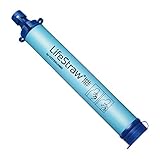
Want to know about these water filter bottles? Click links below for my video reviews
- See my full video test and my full review of the LifeStraw Filter here
- See my full test and review of the Water to Go Filter Bottle here
- See my full test and review of the Lifesaver Bottle here
Learning how to purify water is not complicated and the methods described are relatively easy to accomplish.
In some cases, you will have to be prepared by having certain materials with you or have the ability to find those materials in your environment.
Foraging can result in you finding what you need, such as discarded metal cans or other vessels to boil water in and discarded plastic shopping bags that can used to collect water from green vegetation
Knowing as many of the old bushcraft water filtering methods is essential for all preppers.
But we are in the 21st century folks..!
Modern water filters are the way to be fully prepared.
Don't get caught out - get prepared first.
Happy Prepping Folks.
Steve
Best Solar Survival Light for Bugging Out
There are quite a few solar powered survival lights and solar powered survival torches on the market today making it a difficult task to choose the best solar survival light for your home or bug out kit.
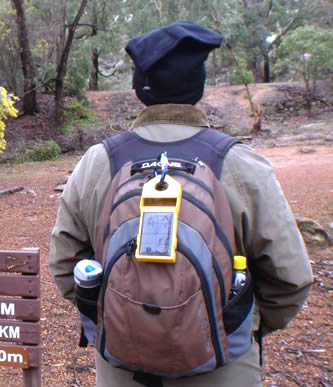
Remember, you don't need hours and hours of bright sunlight to charge a solar powered survival light. You simply need good daylight and if there's a bit of sunshine then all well and good, it all helps. But one of the key factors is, you need to have your solar survival light exposed to daylight whenever you can so its ready for action when you need it the most.... at night.!
So keep it out in the open at all times, just like shown here. >
In order to be able to do that your solar light must be very portable, of which most are, but also very water proof, hard wearing and robust to withstand the wiggling and bumping about that it will get.
When hiking the back of your rucksack is the ideal place. When camped it can be hung onto the top of your tent.
POWERplus Barracuda Waterproof Dynamo / Solar Powered Torch

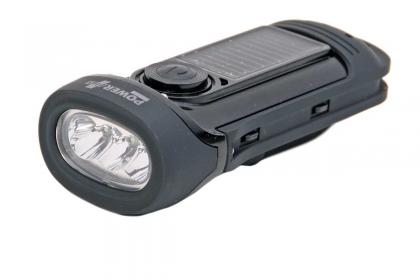

You can either charge the Barracuda using the sunlight during daytime or use the dynamo handle that winds up the torch.
The Barracuda has 3 LED ultra bright LEDs which give you a quite powerful light - certainly enough to se your way.
To find out what other thought of this solar survival light see customer reviews
View more information, reviews and prices on the PowerPlus Barracuda - click here

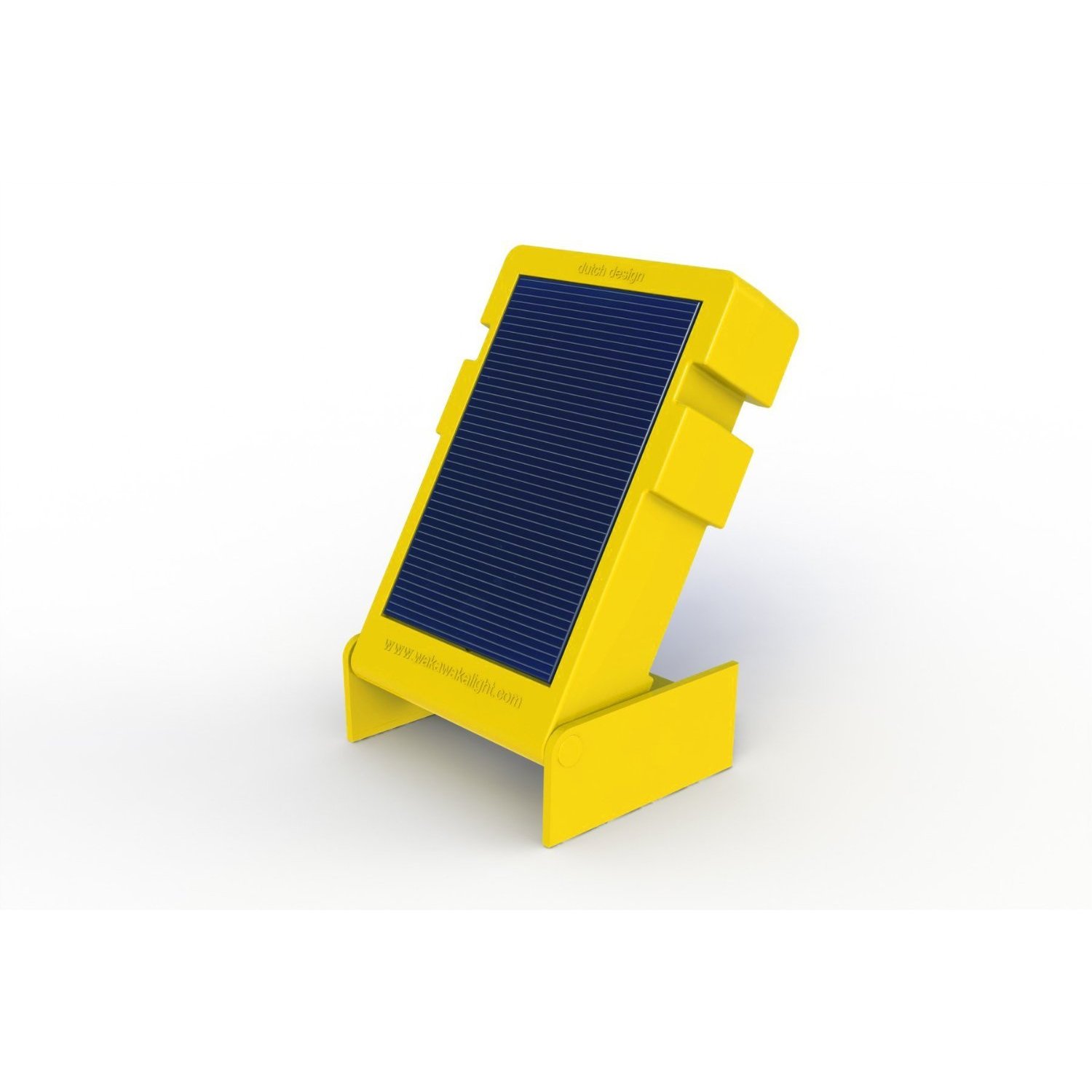
This is a really neat solar survival light that seems to of been designed specifically for preppers.
The WakWaka Solar lamp will give you 16 hours of bright, reading light on a full charge and has some 2:1 use time vs. charge time
It comes with 5 different light modes, including SOS beacon and is both water and shock resistant.
It also has an neat USB port which allows for charging a phone or other device - very clever... This is a top end bit of kit and sells for just under £30 inc delivery - so quite a reasonable price for a lot of kit.
View more information, reviews and prices on the WakaWaka Solar Lamp - click here
Re-Wind Eco Friendly Solar & Wind-up Powerful 3 LED Waterproof Torch

The Re-Wind Eco Friendly Solar & Wind-up Torch has three Powerful LED lights that give a powerful beam. The LEDs also flash to give an emergency signaling touch.
The Re-Wind is also Waterproof up to 5 meters in depth, which is a very handy feature, knowing you torch is going to be OK if you drop it in a puddle.! The torch will fully charge in sunlight but also has the added feature of the wind up handle which will give 60 minutes of light for 1 minute of winding.
A nice compact torch measuring only 24.2 x 14.8 x 4 cm and weighing in at less than 1kg.
Selling at under £15 inc delivery, this offers very good value for money.
]]>
OFF GRID SOLAR SYSTEMS FOR SURVIVAL PREPPERS

As a UK Prepper you may think we don't have enough sunshine to use solar power effectively - well think again folks - the amount of daytime sunshine hours is more than enough to provide the power you need to run essential survival equipment.
Using a simple Off Grid Solar System suitable for usSurvival Preppers is quite easily achieved, and the best part is, it's not that expensive.
If you have ever had a power cut then you'll know just how frustrating it can be. For those of us who live in rural areas these power cuts can become quite often - as a result you learn to adapt and prepare for when they happen.

Fortunately they only last an hour or so. But what if you power was gone...
A complete loss of power for days or weeks or more - would you be prepared for that.?
What about if you were forced to bug out and just get away from a disaster area.?
What Do You Need To Give You Power?

As a prepper it is essential to look at the various Off Grid Solar Systems that are available for Survival.
Cost plays a huge part in what is practical and what's not. If money wasn't an issue then you could run just about everything from the sun and provide power for you heating, cooking, lighting and everything else, but slowly as technology improves the cost of being able to produce solar power is getting cheaper and cheaper.
However, theres always an alternative and preppers know that you have to be able to do things yourself to survive, so making a DIY solar system is within most preppers abilities. A solar heater for your hot water is far more easier than you would think as is providing electrical power for the most essential items.

Off Grid Solar Systems to generate electricity
A solar panel electrical systems, is also refereed to as a solar photovoltaics (PV), capturing systen - the PV panel captures the sun's energy using photovoltaic cells.
PV cells do not require the direct sunlight to work – and are able to generate some electricity even on a cloudy day.
The PV cells convert the sunlight that falls onto their surface into electricity. That electricity is then used to run your household appliances and lighting.

Off Grid Solar Systems to generate hot water
The solar panel is a water filled heat collector where the water is heated via the sun. This collector is heavily insulated against any heat loss and also painted in black for maximum heat absorption.
The system shown here uses no electrical power and works on the age old gravity system whereby hot water rises and creates a natural flow around the the system.

This system works using a pump to create the flow around the system due to the collector being above the tank.
All the components to make these systems are readily available and there are many different adaptation of the basic design, but the principle is always the same
These off grid solar systems are ideal for preppers and would make like a lot better if you decide to bug in. You can keep the essential items running especially on the 12V system.
However, what happens if you decide to bug out.? There are still plenty of solar power equipment to make your bugging out life easier - take a look at what's on offer for solar powered bugging out here.